Showing posts with label Shojo. Show all posts

Sunday, July 27, 2025

The Snarky Boyfriend in Manga

On Votaries I discuss the archetype of the Aloof Hero

A variation of the Aloof Hero occurs in manga, mainly The Aloof Hero Disguised as the Snarky Boyfriend. His aloofness allows him to stand outside of society's norms and comment on them. 

Below is a repost about snarky boyfriends. 

* * * 

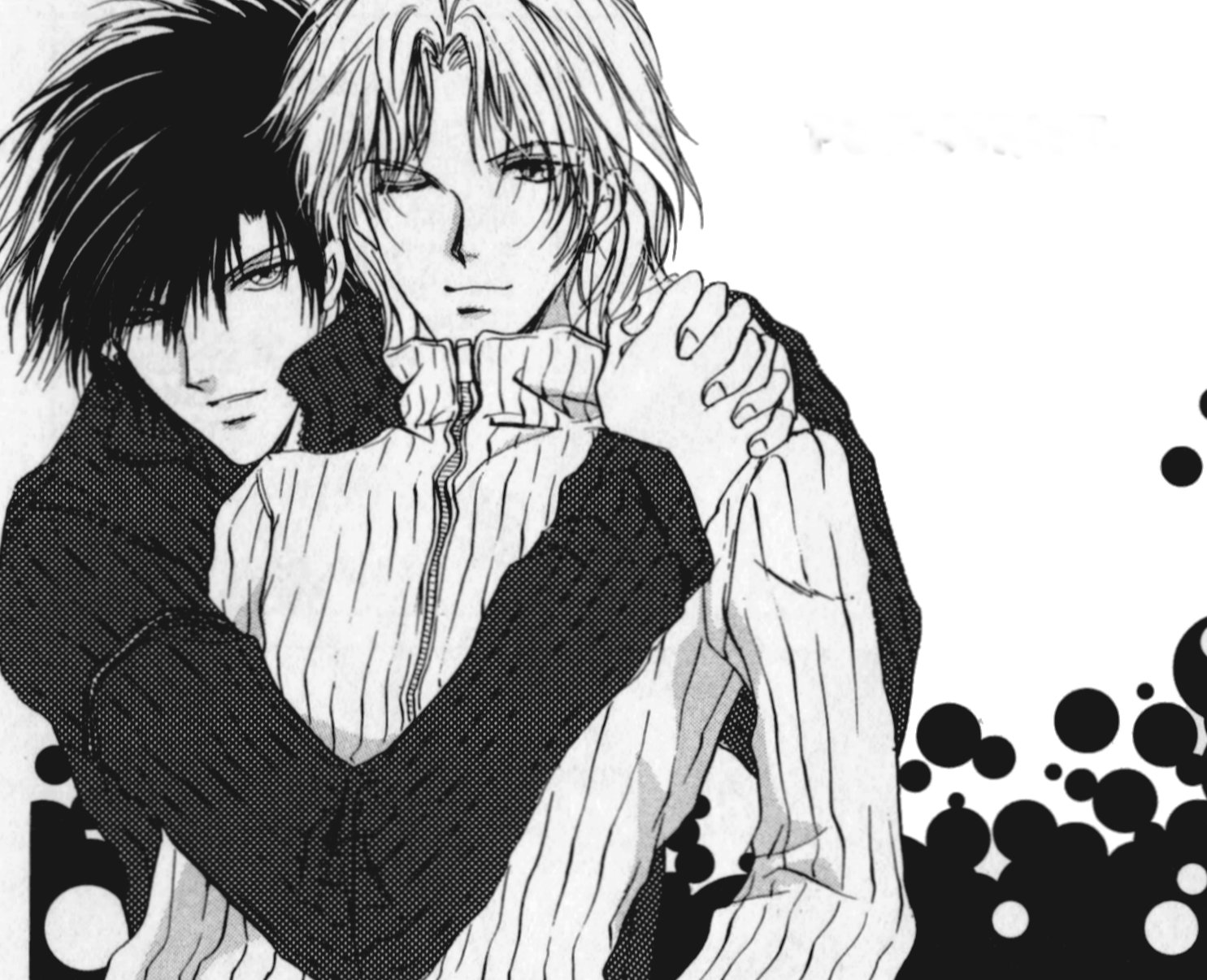
The snarky boyfriend is common in both shojo and yaoi. Think Kurosaki in Dengeki Daisy. He teases Teru, behaves like a taskmaster--then rescues her, comforts her, turns to her when he is sad.

Likewise, Dee in Fake is Mr. Flirty/Playboy/Snarky Guy with everyone, yet opens up about his life and needs with Ryo.

On the surface, the snarky boyfriend is simply a sub-type of the rake: the angsty guy who is only vulnerable and open with the "one" romantic interest.

However, there is a slight (and rather fascinating) variation on the snarky boyfriend. The variation snarky boyfriend is not only sweet and vulnerable with the "one," he is often only snarky with the "one."

This is especially true of high school romances where the secretly snarky boyfriend is the aloof school idol: to his admirers, he is handsome, kind, thoughtful, self-sacrificing, never sarcastic, always on a pedestal, plays sports, gets good grades...

He never lets anyone entirely close (though he sometimes has one good childhood friend). The arrival of the one-and-only in his life is a relief, an opportunity to be his true self, especially since the one-and-only is usually the type to eschew pretense; unlike the snarky boyfriend, the one-and-only always behaves in accordance with his or her true self.

In Only the Ring Finger Knows (manga and light novels), snarky boyfriend Kazuki is only sarcastic with guileless and forthright Wataru. In His Favorite, snarky boyfriend Sato is only his somewhat sadistic self with bemused, straightforward Yoshida.

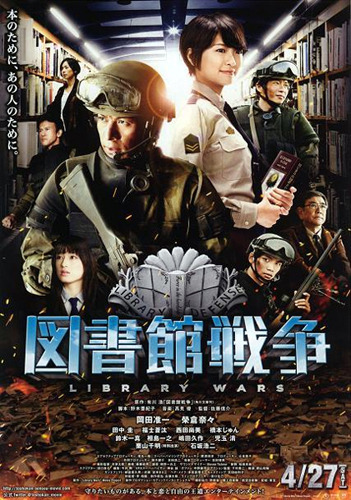
Only Kasahara can entirely provoke the cool-headed Atsushi Dojo in Library Wars. While Paul from Lies are a Gentleman's Manners is singularly capable of drawing the reserved Jonathan into snarky shouting matches.

It's like the Hulk in reverse. And can occasionally go too far. When done well, it showcases the "realness" of the relationship. Whatever outside facades or demeanors the members of the couple give to the rest of the world, to each other, they give their true faces.

Wednesday, January 18, 2023

Live Action Changes Everything: Library Wars

First Movie

In volume 5 of Sasaki and Miyano by Shou Harusono, Sasaki and Miyano go to a live-action BL film. Afterwards, Miyano, who is a BL fan (alongside several of his straight friends, one of whom reads it because of his girlfriend), comments:

"It was sooo good...and it was live-action...I was honestly a little worried about how they were going to adapt it....The original story's told on paper after all, so I figured it wouldn't feel right as a live-action movie. I was kinda scared of it ruining the original. Like, I was scared that they wouldn't look how I imagined them...I think maybe there was even more subtle emotion in this version."

It is a fantastic explanation of why--absent the kind of manga that is simply slideshow images from the movie, which medium I detest--a manga, an anime, and a live-action film of the same work can evoke such different reactions. 

The mediums don't have to be ranked. They simply do different things in different ways. 

The live-action Library Wars movie is a great example of how different different can get. 

I'm a fan of the Library Wars manga series, which I read first. I got the anime for a gift and very much enjoy it. It is similar enough to the manga to feel like a tribute but distinct enough to offer a new experience.

And then there is the live action film from 2013, which I was finally able to watch (thank you, Inter-library Loan!). 

And it's a totally different story.

Kasahara is in there. And Dojo, of course. One major difference: Dojo of the film, played by Junichi Okada (who is apparently as reserved in real life as he is in the film), looks considerably older than his co-star, Nana Eikura. There's an 8-year difference (in the manga, the difference is 4 years). 

The age difference matters because Dojo of the film comes across as quite mature already, not a guy in the process of maturing.

The film is also far more violent than the manga seems to be. Violence is an ongoing thread in the manga and in the anime. With the film, though I enjoyed it, I kept thinking, "Wow, okay, yeah, I guess that's part of the story: another shoot-out." 

Dojo is right in the middle of it. As in the manga, in one scene, he enters a bathroom where Kasahara has cornered a bad guy. The bad guy goes after her and Dojo takes him out. The movements are so quick, I jumped in my seat. 

To put it bluntly, Junichi Okada as Dojo is super hot. And a great action hero.

Consequently, almost by necessity (actors are "writers" in the sense that their auras and abilities transform a film), the film is more about, well, war and the seriousness that accompanies it than the mixture of ordinary life, learning curves, battle scenarios, and dating that appear in the manga.

I don't consider the manga "fake." Look at Londoners going about their shopping during the Blitz!

The point is, a live-action film will gain its own interpretation. It is, in fact, a different beast--so much so that reviewers have complained that the live-action sequel doesn't have much of the Kasahara-Dojo relationship (and note that Junichi Okada moves center stage on the poster).

I'd still like to see it.   

Second Movie

Friday, October 22, 2021

Conversations with the Translator: Trauma in Manga

Kate: Speaking of outlier behavior, another “taboo” topic is mental illness, as we have discussed elsewhere. In Otomen, Asuka has a tendency to find or be found by other Otomen, supposedly tough guys who secretly like make-up and flowers and the equivalent of Michael Bolton music. One of these guys calls himself the Flower Evangelist because he loves flowers so much. He meets a girl who was stung by a bee from a bouquet when she was young and hates flowers, so he decides to cure her. One of his approaches is subliminal treatment (flowers keep popping up and disappearing from her environment). Finally, the manga artist, Junta, points out that this approach could take YEARS; why not try something quicker?

How prevalent are plots/jokes about “trauma?” It does supply plot conflict! I encounter many troubled heroes and heroines in several series (though they rarely end up in therapy). And “trauma” occasionally supplies humor that is not that different from the many jokes made by Niles on Frasier about his group therapy patients.

Eugene: Trauma has been supplying plot lines and defining character arcs going back to the beginning with Shigeru Mizuki and Tezuka Osamu, so much so it could stand as a genre or literary category all on its own.

Ever since the Magical Girl genre went dark with Magical Girl Lyrical Nanoha and reached near perfection with Puella Magi Madoka Magica (Netflix Crunchyroll), practically every new anime season supplies at least one traumatized magical girl. But Hideki Anno deserves a lot of credit for pushing trauma to the narrative limits with Neon Genesis Evangelion(Netflix).

Anno himself described the directorial process as a way for him to work through his bouts of depression. It debuted in 1995 and Anno has been spinning off sequels and reboots in what has become a billion-dollar franchise. Frankly, I gave up on the series halfway through the first season. Mecha series start with two strikes against them in my book and the whole thing got to be too much of a downer.

Netflix recently acquired the streaming rights so I should give it another go.

I previously mentioned A Silent Voice. There’s trauma by the truckload. But as you mention, the first recourse is not to ship everybody off to a therapist. If I were to come up with a general theory, it would be that trauma shapes a character. It is not supposed to define them. The challenge for the protagonists in A Silent Voice and a series like March Comes in like a Lion is to move beyond their pasts.

As with Tohru in Fruits Basket (Crunchyroll Funimation), Rei in March Comes in like a Lion is a strong contender for having the world’s worst childhood. Well, no, Chise in The Ancient Magus’ Bride wins that award. Anyway, Tohru has already moved on when the series starts. March Comes in like a Lion is about how Rei finally does.

The Souma clan in Fruits Basket may be the most screwed up extended family in existence, not only shaped by a tragic past, but magically bound to it as well. That is why Tohru is the one person who can save the Soumas from themselves. She’s been there and done that, so she can identify, but she got over it.

Kate: In Mars, the semi-delinquet Rei turns out to have had a twin brother, who died (or committed suicide) after his girlfriend tried to leave him for Rei. If I remember correctly, the twin brother was not entirely sane.

Rei’s traumatic childhood gives him a kind of princely cache (the family is wealthy) as well as, I suppose, an explanation of why Rei is not a team player. One of the volumes arcs deals with him walking away from the hold his dead brother has on him. His hero status is underscored by his ability to move on.

Eugene: As best I can tell, the premise of Durarara!! is that having a tortured past gives you superpowers. Now, the characters in Durarara!! are basically comic book superheroes and supervillains in a comic book world of Russian gangs, yakuza, mad scientists, and a bike-riding Dullahan (though it takes place in Ikebukuro and everybody looks mostly normal). But, again, what shapes these characters is distinct from what defines them.

So you were a serial killer (as Harry says in True Lies, “Yeah, but they were all bad”)? Okay, but what are you now?

Durarara!! revels in its non-linear narratives and never takes itself too seriously, much like the puckish Bond films from a generation ago. Fruits Basket starts out as a by-the-numbers rom-com with a pollyannish female lead and a touch of magical realism, before plunging into the dark recesses of the human (and not quite so human) psyche. 
 
More conversations to follow!

Thursday, April 11, 2019

Overprotective Fathers as a Trope: Does It Exist in Manga?

On Votaries, I discuss overprotective fathers as a trope. I conclude that 21st-century television fathers have become far more nuanced in their reactions to their families.

My plan was to write about overprotective fathers on Romance & Manga, particularly overprotective fathers in shojo & yaoi manga.

There are some--the fathers who protest when their sons or daughters move away from home or start dating someone they don't know. However, overprotective boyfriends abound far more. Well, except for all the times they decide that reserved, deliberate, almost aggressive inaction is actually healthier for their mates.

It would be most accurate to say that in manga, over-protection is a trope in the negative--that is, lots of manga volumes present situations where the heroes or heroines are left to figure out things on their own. Growth is predicated directly on alone-time introspection.

Over-protection isn't cute in manga. It's dangerous.

Shojo

In Hana-Kimi, Mizuki Ashiya makes a father figure out of Hokuto Umeda, the school doctor. He is sarcastic, aloof, self-interested (he claims). Yet he keeps her secret (she is a girl pretending to be a boy in an all-boys' school) and gives her reluctant advice. His advice almost always takes the form of pushing her to think out the problem for herself: What do you think you should do? He consistently refuses to take the matter of choice out of her hands.

Yaoi

In Honey Darling, the "bear" boyfriend offers Chihiro a place to stay, then is quite clear with him about his duties. This speech is the climax of the romance (I'm not kidding):
If you keep giving up on everything so easily, you'll eventually give up on yourself. Why don't you take your time to decide. Don't rush it. You said this job has been worthwhile. If you feel that way about it, then you'll eventually gain the necessary knowledge and experience to carry you through. 
Of course, there are those manga where individual self-reliance is taken to such extremes that the main characters have to learn to at least tell each other where they are going (think 127 Hours). But that's a post for a different time.

Friday, December 29, 2017

Soap Opera in Manga and Television

Re-post from Votaries:

Speaking of Ross & Rachel . . .

I mention in an earlier post that it helps a manga if the characters have jobs. I've decided that, at least for me, it also helps if there are actual difficulties for the romance characters to overcome.

In Library Wars, Kasahara has to give
up her memory of the perfect guy
and deal with (grouchy) Dojo as he is.
She learns to do this as they work together.
This criterion creates an instant conundrum because I despise the soap opera romance, where the difficulties explode across every page to the utter disbelief of even the most accepting of readers.

So romance ("luv") by itself shouldn't run the story but neither should the crazy events (she had his baby, then he lost his mind, then his long-lost sister with whom he has an incestuous relationship returned after which the heroine was kidnapped by a nobleman with a fetish for twins, of which she was secretly one . . .)

On the other hand, I find Tail of the Moon--with its unstoppable adventures--immensely charming. In fact, most manga series rely on continual external problems for their middle books. (And some manga writers are so good at continual problems, their series' endings fall a little flat.)

So, what's the difference (and I maintain there is one) between the romance run by a good problem and the soap opera romance run by (rolling my eyes) complications?

I think the difference is a direct heir of "the characters need jobs" motif. The soap opera romance is run by whether or not the couple will fall into bed this time and is less effective (in my eyes) than the romance which is run by how the characters get along as they tackle a specific problem (murder mystery, haunted house, social conundrum).

Falling into bed happens in some of the better romance/manga; when handled correctly, it takes place within a context that allows the characters to bond and grow, not simply shriek, "You never told me that your long-lost father is my uncle!" Bones and Castle rightly determined that keeping the main characters' relationships unconsummated through increasingly manufactured interference was rather pointless, especially since the consummated relationships offered far more story potential.

I've said it before. I'll say it again: no one did "romance
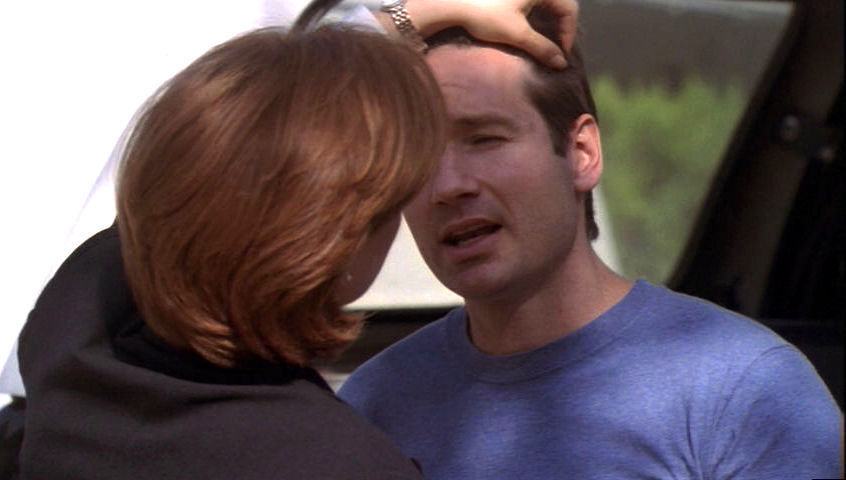
while a story is going on" better than Mulder and Scully.

Now, the unconsummated romance of Darcy and Elizabeth IS the point of Pride & Prejudice but the issue on the table is not whether or not Darcy and Elizabeth will be kept apart forever (oh no, Lady Catherine de Bourgh just burnt down the Bennetts' house!). To an extent, their union is a given. The question is HOW Darcy and Elizabeth will come to understand each other as they tackle balls and errant sisters.

Increasingly bizarre and wild complications that separate a couple are far less satisfying than increasing understanding between two characters who face a single obstacle together. Such an approach also convinces the reader that the characters will survive as a couple. All the soap opera approach does is convince one, "Man, that relationship is doomed."

Tuesday, November 14, 2017

Archetype: The Doubtful Romantic

Keito is 6'4"--he has mixed parentage.
Hajime is 5'3".
The doubtful romantic is such a common archetype in manga, I'm not sure that it is so much an archetype as a cultural condition.

Doubtful romantics are common to all romance. In manga, the doubtful romantic's shame is not rooted in the doubts themselves (I'm unattractive, I'm unappealing, I'm bad at my job) but, rather, to being in a state of doubt to begin with. It goes back to the idea that the Japanese aren't proponents of mental illness as a fallback position.

In fact, it inevitably turns out that all characters in manga are doubtful, even the so-called popular kids (see the popular girls in Dengeki Daisy and Kare First Love). Doubt haunts the medium.

In Cafe Latte Rhapsody, Hajime questions why tall--if awkward--Keito with his handsome face and university attendance and cosmopolitan background would be interested in him. But when he goes to confront Keito, Keito runs away! Why? Because he is afraid Hajime has come to break up with him due to his deficiencies. 

Last Portait: Good relationships
eschew pedestals.
In fact, in almost all cases of an interfering third party, the third party is inevitably more outwardly confident and aggressively assertive than everyone else. Until, of course, the third party gets his or her own manga and we discover that he or she has had doubts all along. In Tateno's A Murmur of the Heart, third-party Tuono seems utterly confident and even sardonic . . . until A Waltz in the Clinic in which Tuono is thrown for a loop by Ichii--the sardonic confidence turns out to be far more wry and self-effacing than we readers suspected.

Doubts are usually overcome not by outside affirmation (the Western approach) but by the main character resolutely deciding, "My doubts aren't doing anyone any good. If this continues, so-and-so would be justified in breaking up with me."

Consequently, in manga as divergent as Library Wars and Only the Ring Finger Knows, temporary doubts are considered positives since handling or overcoming them corrects the protagonists' selfish behavior and brings them in harmony with the group and ultimately the beloved.

Since romance is the name of the game, the break-up doesn't happen. Affirmation still occurs. But only because the other party acts out of love, not obligation. Unlike in Western romances, nobody has to love anybody (though wouldn't it be nice it they did).

Too much doubtful romantic does get irritating after awhile. But when handled with honesty and sweet intentions, it can be quite enjoyable. And in manga, refreshingly self-responsible.

Monday, October 16, 2017

Collection Review: Otomen

Otomen is a delightful series! I own the first book (of 18).

Otomen focuses on the trials and tribulations of high schooler, Asuka Masamune, who has the manliest or manly traits--and looks the part--but is also, secretly, utterly enamored of pretty, cutesy things. He enjoys sewing, making gooey desserts, and quiet strolls along the beach. He is the antithesis of the amusing Tim Taylor.

The conflict arises from his social role versus  his inner self: that is, how society perceives him versus how he really is.

The problem of social perceptions is cleverly done: BIG EVIL MINDLESS SOCIAL ASSUMPTIONS do not cause his problems; rather, tensions arise from the personal assumptions of people whom he adores, likes, and wants to impress. He has to fight to be slowly accepted by a lovable coterie of friends: the girlfriend, who accepts him entirely as he is (and occasionally rescues him); the manga artist, who uses him as fodder for his shojo; the guy who loves flowers; and even the Moe guy who wants passionately to be Mr. Manly himself.

As in all good Japanese shojo, the group expands to include others, including Asuka's so-called rival who is secretly also an otoman, preferring a future of applying make-up to the business dealings of his family.

One of the entirely fun aspects of Japanese manga is the 1950s-like thoughtful struggle against conservative roles. Due to American flexibility and constant change, American plots have to designate blame in order to produce the same struggle--the avant-garde artist rebelling against his fundamentalist, cult parents, for example--and the outcome is often far less harmonious and comprehensive than that found in manga.

Which isn't to say that both conflicts aren't fictionally contrived. Still, it is preferable to read about a sweet boy trying to find his place in life than an angry, rebellious teen telling everybody, "You stink!"

Otomen is about the sweet. 

Saturday, September 2, 2017

Romance Writing Problem: Don't Worry If It's Been Done Before

There are no new ideas under the sun and there's nothing wrong with that. Unfortunately, literary types who have read too many reviews in The New York Times (which tut-tut about "worn-out plots" and "hackneyed characters") will try to avoid this reality in extremely strange ways.

Possibly the holder of the most classic
high school yaoi plot--but how it
unwinds is specific to the author.
The result is not new ideas; the result is operatically weird old ideas that supposedly will take the world by storm by being so "extreme."

This approach is as tiresome as fans getting upset about plots resembling each other. "So and so stole that idea from . . . !" Sure, okay, but did you like what so and so did with the idea? Did they do something better? Or worse?

These complaints remind me of the peers I knew in high school who would immediately stop liking bands when they got popular. Oy vey.

There are a limited number of romance plots, some of which I address here and here.

In sum, most manga romances concentrate on (1) the meeting followed by (2) the problem, and (3) the make-up.

The problem falls into two categories: (A) one which is intrinsic to the characters, based on social standing (a doctor and a yakuza), misunderstanding (the girl or boy who falls in love with the popular student), or personality (extrovert v. introvert); (B) one which is caused by outside influence, which can entail a third party, social pressure, family debt,  and political machinations.

A long romance will almost always borrow from A and B even if one is emphasized over the other.

Take Sense & Sensibility by Jane Austen: Edward and Eleanor meet; there have the same social standing but not the same financial support, making Eleanor a "poor" match; their relationship is complicated by a third party, Lucy Steele, whose interference is due largely to Edward's personality/poor choices.

Or, take Venetia by Georgette Heyer; Venetia and Damarel meet; they belong to the same social class but Damarel has a terrible reputation due to his admittedly terrible past; interfering third parties separate them for Venetia's sake.

This 1-2-3 plot is not only respectable; it has been around forever.

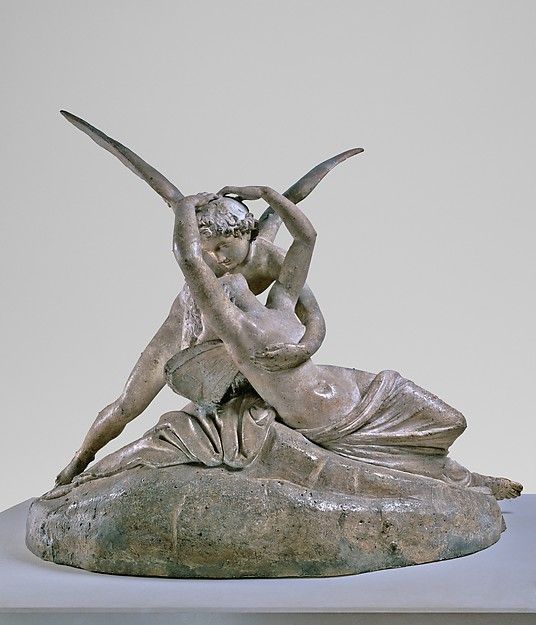
Take Cupid & Psyche: they meet but Psyche can't see Cupid (or Eros); one is a beautiful mortal maiden--the other a god;  the mortal maiden's jealous sisters interfere when they persuade her to look at Eros (Cupid) at night while he is asleep; chaos ensues.

Nothing is gained by messing with this plot structure. Go ahead: turn the characters into depressed moderns moping about the bleak landscape, pontificating about their pointlessness in life. It's still the same plot. Or put them all on an island where they can kill each other off for a variety of motives. Same plot. Or stick them in poverty and show how they are kept down by "the man."

If it's a romance, it's the same plot. You don't like that? Don't read romances. Or try to write them.

What makes a romance unique is how the plot unwinds--that is, how we connect to the characters; whether we enjoy the dialog; and, most importantly, whether we feel a sense of recognition (yeah, that's what love feels like).

The politician, to the right, is blithe--he has already figured
out how to handle the scandal.
"Kiss Scandal," the short story at the end of Stolen Heart by Maki Kanamaru and Yukine Honami may not be an entirely realistic portrayal of American politics (a bachelor congressman and his male political secretary are accepted as lovers by the great American public--at least, the story is based in Maine, not Mississippi!) but the portrayal of the congressman as both manipulative (even of his lover) and sincere is so hilariously "real" to politics, the story works.  

Likewise, Constellations In My Palm by Chisako Sakuragirests and Yukine Honami operates on the highly annoying plot point of people keeping basic information from each other, but the realistic assumptions of both main characters give the volume a patina of reality--plus the one character's failure to pick up on basic household discussions, like his sisters discussing how to redecorate their guest's room, is too real not to be believed!

Likewise, shojo like Mars stretches the readers' suspension of disbelief with the sheer plethora of machinations by outside parties, but Kira and Rei's honest attempts to figure out their living arrangements bring the whole series back down to earth.

Even something as highly ridiculous as Kabuki by Yukari Hashida is maintained by the natural confusion of the main character regarding who exactly his one-and-only is supposed to be.

Rule 2 for Romance Writers: make the story personal, real, and yours. Don't worry about whether it's been done before.

Saturday, August 12, 2017

Romance Writing Problem: Start with the Problem

Nausicaa begins with the main
character in literal flight.
Manga can teach writers a lot about what makes a story work.

First, manga teaches writers to establish the story's problem early on.

Good genre literature starts with a problem: aliens, a dead body, unreciprocated love, etc. etc. In the world of television episodes, this is the action before the series's intro, like all those patients who fall ill in the 5 minutes before the House theme song comes on.

One of the powers of manga is that the story, by necessity, must begin with action. Think again of House and all the talky scenes that take place in hallways--"Let's walk!" Generally speaking, if it is a visual, it needs to incorporate light and the appearance of movement. The average manga starts with something-happening.

Some stories require context--where and who and what. An introduction that can provide background, action, and problem is best. Although most of Blue Morning takes place when Akihito is a young man of 17/18, the series starts with ten-year-old Akihito arriving at his family's home for the first time: the tension between Akihito and the family butler Katsuragi is established in those opening pages.

How a character deals with an opening problem can also provide context. Rabbit Man, Tiger Man starts with Uzuki saving Nonami, which will greatly complicate his life from that point on. We know Uzuki is a doctor because he knows how to tend Nonami's wounds and where to go to get the proper supplies. We know Nonami is potentially dangerous because, well, guys who lie bleeding in alleys yet instruct their helpers not to call for help for fear of reprisals generally are dangerous.

The basic rule of plot: revealing the
secret is more interesting than hiding it.
The story's opening is all about pushing the action forward--what gets the ball rolling? Kare First Love starts with a non-propitious meeting between Karin and Kiriya, establishing several volumes of misunderstandings. Hana-Kimi begins with Mizuki already established in a boy's school as a girl-disguised-as-a-boy; she leaves the reader in no doubts as to why she is there and for whom. Maiden Rose begins in the middle of a battle. (And there's the tank!)

Rule 1 for Romance Writers: start with action.

Lisa Kleypas's Devil in Winter begins with the heroine standing in the rake hero's office informing him that she wishes them to marry, so she can get away from her horrible relatives. Great! Let's hit the ground running!

Other romances are equally effective, but some, unfortunately, employ what I call the "boring biographical approach"--those biographies that begin with "So-and-so was born in year 18__ in the town of R__ to parents Mildred and Rufus So-and-so. The family line goes back to . . ."

Snooze.

Start by giving me a little vignette, a insight into the person's life. Give me a reason to learn the boring stuff.

Likewise, good romances, like good mysteries, start with a reason for us to worry or fear or delight or ponder about the main character's next actions. The vignette doesn't have to be melodramatic--it can be as quiet as Only the Ring Finger Knows, which begins with Wataru listening to a friend complain about Kazuki whom he will soon meet at the water fountain. Or Apple & Honey: His Rose-Colored Life which begins with Natsuki contemplating what a strange extroverted guy his boyfriend is.

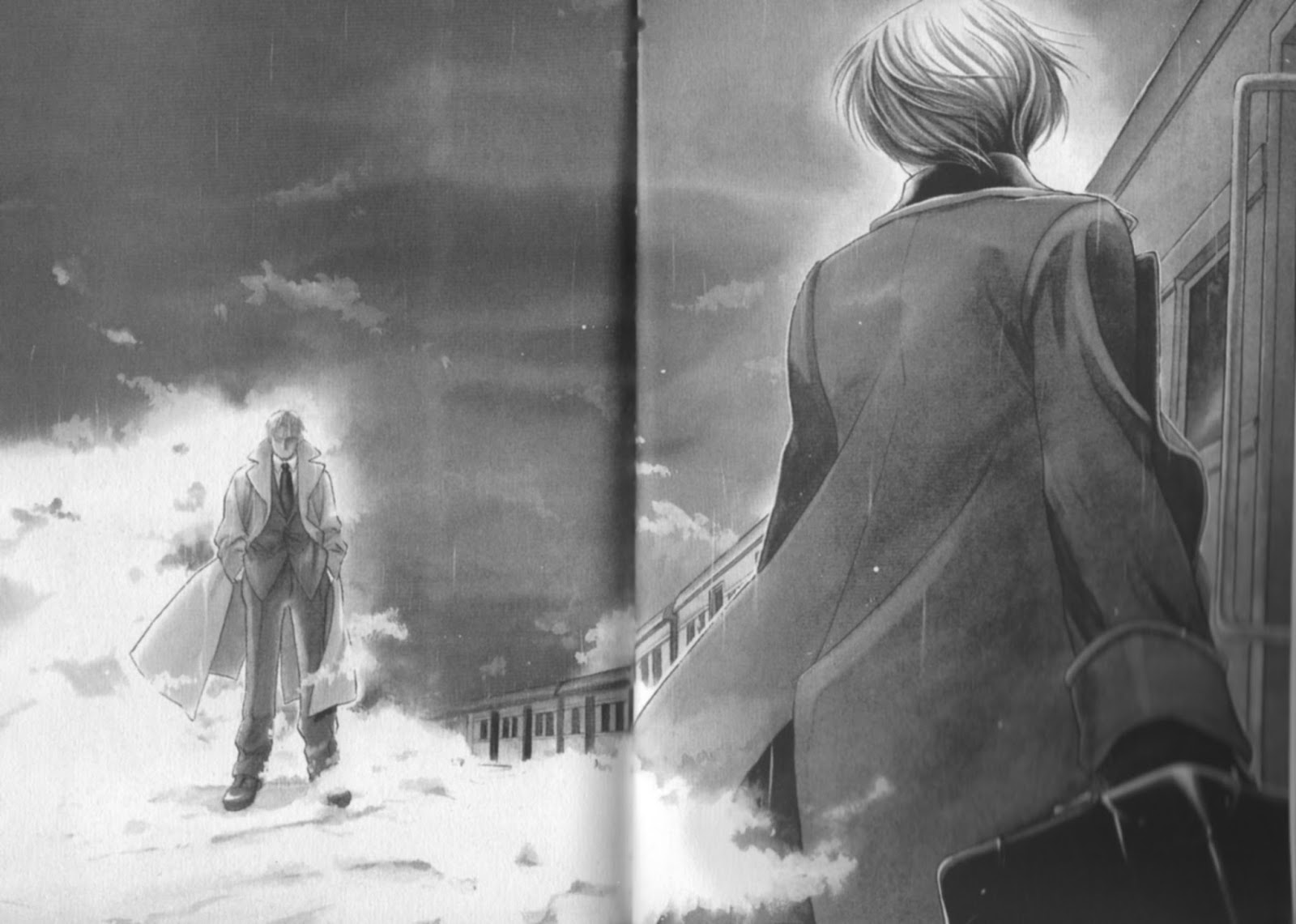
Even Maiden Rose actually begins quite quietly at a train station (the battle scenes occur within 3 pages). But the quietness is belied by the tension between the characters. Why are they meeting? What does their relationship entail? What will happen to it next?

To be continued: The problem itself . . .

Thursday, July 27, 2017

Complaint 4: What's All the Protesting For? Male Claims About Romance

Male analysis of yaoi specifically and romance generally will often contend that real men, straight or gay, do not think like the male characters in these genres. (I've encountered this claim in manga and romance analysis by self-labeled straight and gay male readers.)

Okay. I am mostly willing to go along with that, partly because as a woman, I'm not in a position to argue and partly because I tend to see yaoi characters (at least) as archetypes and tropes anyway. (They demonstrate characterizations common to archetypal characters as well as gendered characterizations, as I will address in another post.)

Yet I confess to being somewhat flummoxed by the insistence. The whole androgynous thing leaves me a tad nonplussed, yet generally speaking, I don't find the problems and worries and desires of romance and/or yaoi male characters to be all that different from those of male characters in, say, Shakespeare. Or Homer. Or, for that matter, Oscar Wilde and Walt Whitman.

On the modern end: take Gus and Rusty from Major Crimes. Major Crimes is the brainchild of producer James Duff who is married to Major Crimes actor Phillip Keene (they lived together since 1993, marrying in 2013).

The orientation of Major Crimes producer & husband-actor doesn't guarantee the reality of any of the show's fictionalized relationships--this is television after all. My point: Rusty and Gus have never struck me as any less real than other television relationships. Neither do they strike me as substantially different from the yaoi characters that I encounter in my choice of manga. The same issues crop up: 
Worries about work versus time together. Jealousy. Selfishness. Commitment. Levels of commitment. Sacrifice--or not. Uncertainty. The need to hear, "I love you." Issues over PDA and other issues related to physical intimacy. Discussions about the future. Moving in versus not moving in. Wondering "where we are at." Wondering about marriage. Not wanting it. Wanting it. Approaching the relationship from different angles. Different personalities. Different styles of expressing affection. Wanting different things. Moving at different speeds. Feeling bereft. Hurting when the relationship goes bad. Missing the other person. Wanting the best for the other person. Getting irritated at the other person. Growing "old" together. Falling into patterns. Feeling comfortable with everyday routine . . .
I recognize and care about all these things. Am I truly supposed to believe, as some men so urgently insist, that men don't care about them too? Despite The Importance of Being Earnest, Romeo & Juliet, Rusty & Gus? So Jean Cocteau just--what?--produced Beauty & the Beast (1946) by accident?  Of course, Cocteau was bisexual. But what about He Said, She Said, the movie with Kevin Bacon and Elizabeth Perkins in which the man's story, directed by the husband of the female co-director, is more romantic than the woman's story even as it tackles similar issues/concerns?

Parsons-Spiewak
When, in October 2013, Jim Parsons called his relationship with now husband Todd Spiewak "an act of love, coffee in the morning, going to work, washing the clothes, taking the dogs out—a regular life, boring love," he was . . . lying? Because that sounds like a good life to me, a woman. And remarkably similar to the yaoi I read. Not to mention other romances.

The first English romance, Pamela, was written by a straight man. The stupidest yet possibly most famous romance novel Lady Chatterley's Lover was written by a man who showed tendencies in both directions. And then there are those lush, emotion-filled (and often depressing) novels by E.M. Forster, who was definitely gay (I know women who swear that no movie has ever been more romantic than Room With a View and Maurice isn't that far behind). Finally, there's the book I've never read (leading to the movie I've never seen) but know about anyway because of its ubiquitous presence in our culture: Love Story by Erich Segal (husband to wife Karen; father of 2). 

Another classic couple: Kate and Petruchio
Some of the sappiest descriptive essays I've read were written by young men about their girlfriends.

And some of the most practical, everyday relationship advice I've encountered was written by men.

Consequently, I am eyebrow-raising confused when (some) men--straight and gay--claim emphatically that men don't care about all that romance-relationship stuff that women get so obsessed about, don't think about it
Thanks to Ed for reminding
me how many of these couples
were created by men.
the same way, and certainly don't have the same interests/concerns/ideas/attitudes as those men in those books that women like.

It is true that women write and read more romance (by a fairly hefty margin), including paperback Harlequins, shojo, yaoi, and gay literature, but literary interests don't translate into life interests. In general, women being more interested in romance supports less the idea that men aren't interested in relationships and more the idea that women tend to be more language-oriented while men are more visual-oriented.

I'm beginning to think the male doth protest too much.

Friday, July 7, 2017

Collection Review: Dengeki Daisy

Time for a shojo review!

Kyousuke Motomi's Denjeki Daisy (of which I own one volume out of sixteen) is a natural follow-up to Just Around the Corner since it involves another adult/high-schooler relationship. The age difference is not as great as in other manga (16/17 to 23/24 rather than 17/18 to 27/28). And the adult is a blond-haired custodian/hacker rather than a teacher. Yet the difference in age is a commented-on factor.

Numerous people refer to the male protagonist, Kurosaki, as having a "Lolita complex"--while yet encouraging him to maintain his relationship with high-schooler Teru. Likewise, one of Teru's frenemies is a high schooler engaged to a much older man; the other teens consider this weird, yet the young woman's parents are utterly okay with the situation. The issue is not social stigma but the young woman's personal freedom (and being able to finish school with good grades).

The plot is an extreme variation on Tom Hanks/Meg Ryan's marvelous You've Got Mail, a story about a relationship bound up in both email and face-to-face meetings, where one character doesn't know that the other character knows the first character's identity.

Granted, Dengeki Daisy has WAY more angst what with dead brothers/mentors and computer viruses and investigations and whatnot. But the beginning volumes, at least, take place in everyday life where the characters are occupied with everyday emotions/problems.

The final volumes are downright confusing. I still can't figure out what was supposed to have taken place. Why did the existence of the one character have anything to do with the virus code? Why did they go to the island? If the one character is directly linked to the virus code, why would a physical location even be necessary?

I hate to say this but I didn't get the impression that the ending volumes were confusing as in "you need to read this several times to catch the clues" but confusing as in "I don't think the writer knew how to end this series."

Long manga series depend so much on continuous action/ongoing problems and plots, they sometimes fall to pieces at the end when the mangaka has to tie everything together. Dengeki Daisy could be one.

Or not! If I ever figure it out, I will post again. 

Sunday, May 28, 2017

Archetype: Brooding and Aloof and MINE

Reserved Kazuki brings flowers to a
surprised Wataru.
Several years ago, Isaac Asimov wrote a very funny piece about why Spock (of The Original Series) was so sexy, i.e. "dreamy." He asked his twelve-year-old daughter. She responded, "Because he is so smart." Asimov's response (in sum): "I never knew smart guys finished first!"

I postulate an accompanying reason: The Spocks are so attractive because they give off the aura of being one-woman men, if the woman can crack the shell. Spock's smartness is both his attraction and his shield. Only one other person is allowed inside. (For Slash fans, that person is Kirk.) 

This type crosses borders in a way that other archetypes simply don't. Blink--there he is again. Darcy. Somewhat less aloof (but still one-woman) Daniel (Stargate). Sherlock (in his multiple manic guises). And many, many manga heroes.

In manga, the two threads--smart and devoted to a single woman or man--are woven tightly together. The brooding, aloof hero is almost always an ace student; he is also almost always a leader despite his internal discomfort with the role.

Crack the shell and he is yours: hence, the number of aloof yaoi heroes who claim to be straight right up until they fall for the funny, quirky, optimistic hero protagonist.

I've discussed elsewhere why I think the supposedly straight yaoi hero is not a matter of wish-fulfillment for female readers. Rather, instead, he showcases love (or rather, recognition) transcending everything (and everyone) in order to bring the compatible lovers together.

To put it another way--the point of the smart, aloof (or at least not immediately available) hero is necessary to the ultimate romantic fantasy: I let you inside, then close the gate.

Us against the world. 

Not a yaoi couple: that's dressed-as-a-
boy Mizuki with Sano, who confesses
when pushed to the limit.
I could now debate the plausibility and/or workability of that desire, blah, blah, blah. But that's a waste of time. It's powerful. It transcends culture. And it is often the way that people narrate or define their relationships in real life. It's a language that speaks to something so innate in us that the stern hero who casts a jaundiced eye on everyone but the lover shows up over and over again throughout history and countries.

From a writing point of view, this hero is usually not the narrator. Like Elizabeth with the original Darcy, shojo and yaoi manga narrators are often the recipients of the aloof hero's devotion. Their job is to ponder (1) what the heck is up with this guy; (2) figure out if they can reach him; (3) figure out what to do once they have reached him.

It sounds highly exhausting in real life, yet we readers still root for these couples. Everybody needs a haven. (And perhaps, secretly, we all believe that we are Darcy, and someone should try to figure us out.)

Coming next: Fun and Boisterous and Mine

Tuesday, May 23, 2017

Collection Review: Until the Full Moon

Until the Full Moon and @ the Full Moon take me back to Sanami Matoh (Fake). I read them because of Fake. Matoh has also written a number of fantasy manga full of high jinks and ADHD characters. These latter manga are cute but rather too frantic for my tastes. Fake has its own moments of over-the-top antics and scenarios, but it is grounded in the "case" structure. There are also plenty of reflective moments in Fake, especially for the series' couple.

Until the Full Moon and its sequel @ the Full Moon fall between Fake and Matoh's more high energy manga. The premise is delightful (and common to Japanese manga): a character, Marlo, is male except during the full moon when he becomes female. His change makes it possible for his family to marry him to his childhood friend, David, who is totally fine with the whole wacky world of Marlo (and happens to love both male and female Marlo equally although the ostensibly shojo manga is quite coy about the sexual relationship between them and implies at the end that Marlo will now be female most of the time and only male during the full moon, which will make having a baby possible since Marlo can hide during the full moon to stay female).

The manga is fun, mostly due to Marlo's female persona; although entirely female and downright cute, she is still rather tomboyish. Taken together, she/he is absolutely darling. The first volume has a stronger set of stories and the first set (Until the Full Moon) is better plotted than the second (@ the Full Moon), but both are engaging.

My favorite part is the short story at the end of Volume 1: the fairy tale explanation for Marlo's condition that takes place in a Stephen Sondheim-like past. It's sweetly romantic with a decent pay-off.

@ the Full Moon is fascinating because Matoh's art changes; the top and bottom image are from Until the Full Moon while the middle images are from the later @ the Full Moon. In one of her afterwords, Matoh argues that her art didn't change that much--it was always developing in a single direction. And I think she has a point. But it is noticeably different. I didn't care for the difference at first, not because I didn't like the art itself but because I'm such a huge admirer of Fake, which resembles her older style more than her recent one.

However, Matoh still manages to capture motion, which is a powerful and admirable skill for a mangaka.

Thursday, May 18, 2017

Looks in Romance Manga

It has to be said--

In Library Wars, Kasahara's tallness--specifically her
being taller than her leading man--is a recurring motif. 
It is handled cutely--and Kasahara herself grows to
appreciate her height. Dojo never minded.
A great deal has and is and will be written about how society and the media judge people's looks. Some of my students, usually young women, write about the pressure of having to live up to an outside, media-enforced standard--and they are often the most classically pretty and coifed of all my students.

A common trope in romance (and unfortunately in reality) is when a potential suitor decides to "nobly" sacrifice his dream of a beautiful woman hanging on his every word by "settling" for a smart, plain girl. The potential suitor as well as the plain girl's family, friends (and presumably her hamsters) then expect her to be profoundly grateful, even indebted to him, for his choice. Even if he himself is totally ordinary looking. And even if he himself is so tedious it makes her brain want to die.

Mr. Collins is alive and well. 

Western romance struggle with this issue. Heroines are sometimes beautiful, sometimes plain, sometimes average, sometimes cute, sometimes unusual. Sometimes, as in Persuasion, beauty is in the eye of beholder (Wentworth is convinced at the end that he never said anything disparaging about Anne's looks). Sometimes, as in The Grand Sophy, Sophy's extroverted hutzpah accompanied by handsome looks make such a strong and disarming first impression that issues of looks rarely enter the story (kudos to Heyer--this approach is somewhat unusual). Sometimes, as in Jane Eyre, looks are not supposed to be the point (since Rochester is supposed to be "not handsome" and Jane is supposed to be "plain") yet keep cropping up as Rochester and Jane compare themselves against possible rivals.

And the list goes on.

Ukes in Yugi Yamada's manga are often
quite gentle looking. Sometimes they are
are actually more like Seyun (see below)
but Shoichi  is as gentle as he looks.
The issues never truly fade, no matter how "advanced" the writer (in fact, many times, a progressive writer is more self-conscious, dwelling continually on looks rather than simply describing everybody as beautiful and moving on). And although male looks are customarily raised, the issues almost always revolve around the woman's sense of indebtedness. If she is plain, then she should be grateful for being noticed (or work really really hard to be "unique" and "nice" so the universe will forgive her for being plain). If she is beautiful, she should be grateful to the man who looks beyond her beauty and judges her for the sake of her inner self.

It's the sort of thing that makes one understand why teenage girls go all Gothy and read depressing literature about people falling out of buildings or killing everybody at the prom.

My problem: I like romances. I'm also enough of a realist to know that human beings being what they are, looks have and are and will be common discussion fodder, not only in the media but in literature and art (I draw my own personal line at gossip based on comparative statements).

Seyun is a sweet-faced uke who fights
like a demon. The disparity is part
of the plot/relationship.
Japanese romance is no different in this regard. Looks are discussed! What makes manga slightly more appealing is that the emphasis is not on the indebtedness of the plain person but, oddly enough, on the conspicuousness of the good-looking person.

For instance, male characters in yaoi (with some exceptions) are often handsome, tall, and reserved (Darcy all over the place). These traits are mentioned. However, at the back of the comments is the soft implication that standing out for being so handsome is nice and all but couldn't it be kind of, well, show off-y?

The same is true for beautiful girls in shojo. Is it really such a good thing?

That is, the cultural default isn't "everybody should be handsome." The cultural default is "isn't it amazing when people are handsome." The beautiful girl and handsome guy are certainly the objects of attention (squeals and adoration) but that attention can backfire.

Ordinary people don't have to apologize for being ordinary, which seems, considering the number of ordinary people in the world, a far more civilized approach than not.


Rivals will comment on Akihito not being as classically handsome
as Asami, but Akihito is more concerned with Asami's
nutty lifestyle than his looks. He dismisses the rivals as
jealous and short-sighted--their preoccupation
with looks/appearance is a sign of their
literal inability to function in society.

Saturday, May 13, 2017

Fruit of the Poisonous Tree, Coincidences in Fiction, and Human Behavior

Snow White should have asked more questions:
"Where exactly does that apple come from?"
I apply the same rule to "suspension of disbelief" as the courts do to "fruit of the poisonous tree."

Law & Order 101: the detectives discover evidence based on an illegal search warrant; the judge determines that since the warrant was illegal, anything coming from the warrant is also illegal.

BUT if the detectives/lawyers can prove that they would have come upon that evidence in a different, legal way, the evidence is allowed to stand. It is no longer "fruit of the poisonous tree."

I apply the same caveat to plot points that rely on coincidence, last minute revelations, or random miscommunications. The coincidence, last minute revelation, or random miscommunication leads to the murderer being caught, the hero/heroine being saved or the lovers miraculously changing their minds and not getting on the boat.

And I roll my eyes. Unless I decide that the outcome would have occurred anyway. Then, I let it go.

In Only the Ring Finger Knows, Wataru and Kazuki fall out of communication while Kazuki is in New York because Kazuki's friend's medical condition worsens; Kazuki then gets into a minor car accident and has to go to the hospital for X-Rays; then Kazuki assumes he'll have time to call Wataru about why he mailed back his ring but he ends up having to return to the hospital, etc. etc.

Kind of ridiculous. But the point is to highlight the tension that Wataru and Kazuki, an 18 and 19-year-old,  feel after being away from each other for so long and to point out the understandable fears and assumptions that a couple can develop apart. It is actually quite believable, however seemingly manufactured.

Likewise, Steel Lahti in Blue Sheep Reverie coincidentally taking Kai as his lover--before realizing that Kai has an ulterior motive--seems a bit daft until one realizes that Lahti already knew who Kai was (from Shiki) and was willing to run the not-too-terrible risk of keeping him close in order to discover Kai's intent (he runs a similar risk later with Salir--so his behavior is consistent).

Sometimes, when a possible plot point seems too outrageous--but I like the story anyway--I simply shorten the time frame in my head. So yes, okay, it is kind of difficult to believe that it would take over a year for someone to discover that Mizuki of Hana-Kimi is a girl in a rough and tumble boys' school. Still, women have passed as men before and if one simply decides that everything happened in about four months . . .

And sometimes--if I REALLY like the story--I just decide that the whole thing is taking place in some alternate universe where ordinary rules of probability apply differently. But not because the whole thing is a dream. Some rules have to apply; otherwise the story ceases to be fun at all.

See Votaries for non-manga examples.

Sunday, March 5, 2017

Workplaces and Plot

I comment in a prior post that manga (really, all fiction) works best when the main characters have jobs (one likely reason that Buffy went downhill after Buffy graduated high school was her character was far too realistic as a waffling, non-employed 19-year-old, and waffling, non-employed 19-year-olds are not exceptionally interesting).

Manga use workplaces in a variety of ways. 

The Workplace as a Useful Way for the Protagonists to Meet
Much yaoi and shojo revolves around salary(wo)men and their problems. The office environment becomes a useful source of obstacles but also a useful excuse for the protagonists to meet (followed by the useful obstacles).

However, as mentioned in the previous post, a vague office environment is not nearly as effective as a specific one. 
False Memories by Isaku Natsume uses the setting of a toy company and its contractor (the company that will make the toys). One protagonist, Nakano, belongs to the toy company. The other protagonist, Tsuda, belongs to the contractor. They know each other but haven't met in many years.

In classic networking business style, once their respective bosses realize they knew each other in high school, the bosses stick them together as the respective point men for their teams. So they have to meet a lot and talk, no matter how much Nakano (says he) doesn't want to. Useful, believable context that creates masses of ongoing tension.
The Workplace as a Useful Source of Conversation
Even a couple that doesn't work together needs something to talk about. No matter how much they love each other, ordinary life must still be dealt with--and ordinary life includes work.
In What Did You Eat Yesterday? by Fumi Yoshinaga, Shiro and Kenji work as a hairdresser and a civil lawyer. They discuss their friends, their families, food (of course), and their jobs. Even when they don't discuss their work directly, what occurs at work affects their attitudes and conversations at home. In the image, Shiro realizes with a shame-faced shake of his head that he finds it easier to listen to his clients' problems at work than to Kenji's far less complicated problems at home.
Everybody's Getting Married by Izumi Miyazono: This screwball-like shojo comedic manga revolves around a young career woman who wants to get married and her boyfriend, a young newscaster/host for entertainment shows who doesn't. But they love each other anyway.

They can't talk about not getting married ALL the time. The rest of the time they discuss their jobs, mostly his, including the tension he feels having to host a live televised show and how he handles his critical boss. 
The Workplace as a Useful Source of Plot
And sometimes the job is the plot. Toko Kawai's In the Walnut and Loveholic are both excellent examples of work supplying the main problems. Character development is linked directly to how the protagonists handle these problems. 
In the Walnut is the title of a 2-volume series and of the art gallery around which the series revolves. In the Walnut is owned by Hideo Tanazaki. His boyfriend, Sohei Nakai--a film student graduate who works for independent (starving) directors--often visits, only to get embroiled in slightly shady transactions. Sometimes, these transactions involve condoning a forgery; sometimes, they involve uncovering a theft; sometimes, they involve outbidding bad guys at auctions. In fact, the manga is a kind of mystery series in which Tanazaki solves art problems by moral though not always legal means.
Note: "In the walnut" refers to Hamlet's speech in Act 2, Scene 2: "I could be bounded in a nutshell, and count myself a king of infinite space, were it not that I have bad dreams." ("Nutshell" is sometimes translated as "walnut.")

The protagonists of Loveholic are an independent photographer and a manager from an advertising agency. Problems at work often spill over into their personal lives. When Daisuke Matsukawa's jealous co-workers sabotage his marketing campaign by stealing his ideas, Kentaro Nishioka agrees to supply him with new shots and even delivers them to the office. He also agrees to enlarge prints for Matsukawa at the last minute; in revenge for the unexpected request, he includes a silly picture of himself which sends Matsukawa into fits. The silly picture becomes a recurring motif throughout the manga.

On a more somber note, the issue of work and family leads Nishioka to decide to relocate. He has gotten as much as he can out of living in Tokyo. He is ready to move back to Osaka and give back to his community there. Naturally, the issue, Do I ask you to go with me? arises.
Whenever I'm reading a book with vaguely defined characters, the first fix that comes to mind is always, What do these people want to do with their lives? Work-wise?

The next question is, What books do they read!?