Showing posts with label Physicality in Romances. Show all posts

Thursday, September 10, 2026

Appearance & Identity in Manga and Other Works

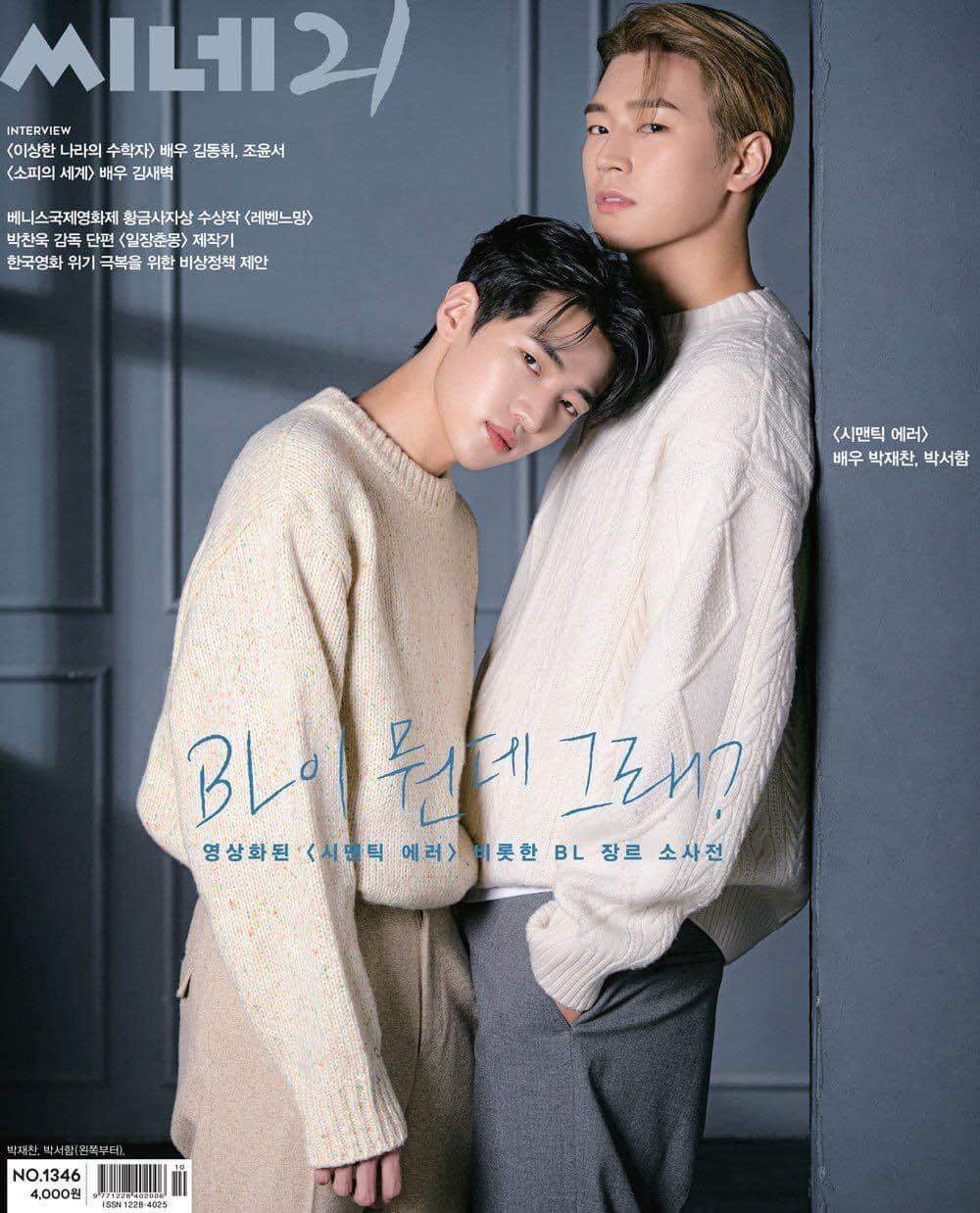
In the manga series, His Favorite by Suzuki Tanaka, Sato was once a short, fat kid who got mocked by his peers (and defended by Yoshida). After time abroad, he returns tall, svelte, and handsome. 

Tanaka captures a basic truth with Sato (which Bronte also captures with Rochester). Whatever his appearance, he still thinks of himself as THAT kid. In fact, as far as Sato is concerned, he IS that kid. 

Sharyn McCrumb explains the psychology here in Missing Susan. Elizabeth MacPherson is on a tour with a woman, Susan, who had a great deal of cosmetic surgery and physical therapy. Susan is entirely exasperating (and is repeatedly nearly murdered). Fellow tour members explain why to Elizabeth:

"I don't think she's used to interacting socially," says one.

Another states, "She hasn't learned how to stop acting like a wallflower. She's only pretty on the outside; she doesn't believe it yet." 

Years ago, a reality show on television had people get plastic surgery. The plastic surgery was inevitably accompanied by therapy. And truth was, people really didn't change. In one episode, 3 sisters had plastic surgery to remove a genetic inheritance, what the sisters themselves referred to as turkey neck. After, the sisters went on a cruise.

And the one sister who was already straight-forward and confident behaved straight-forward and confident. And the other sisters, who were far less confident acted...exactly the same as they did before. 

With Sato, Tanaka captures a true inner issue: self-esteem honestly has little to do with appearance...unless appearance has been incorporated into a person's identity at a much earlier age. Yoshida is a short kid in high school, but he was the tallest in elementary school and still retains those leadership qualities.     

Thursday, August 13, 2026

Disguises: Boy to Girl

Earlier, I discuss the archetypal disguise of the girl dressed as a boy

The archetypal disguise of the boy dressed as a girl has an equally long tradition. Achilles is hidden among young women by his mother, who doesn't want him to go to war. Odysseus unmasks Achilles when he places a spear among a variety of goods and Achilles picks it up. In my critique/tribute to Herland--which involves a boy dressed as a girl--my primary male narrator and one of the mentors have this exchange:

Moadine said, “In the tunnel, an argument ensued. Astyanax was male, a potential warrior. He would bring danger to the sanctuary the woman hoped to find or build. They knew the story of Achilles, how Odysseus uncovered him, disguised, in a court of women, spotted him because he alone picked up a sword.”

I nodded. I knew the story. I also knew plenty of women, including a niece, who would also have gone for the sword. Just as I knew plenty of women in Troas who yearned for competitive opportunities as much as did Alim. 

Boy-to-girl narratives often involve disclosure due to "male" action--hence, my narrator's ruminations. The same narrator will later point out that Alim is steadily getting taller and stronger than his compatriots--despite his youth. 

The question, What constitutes differences between genders? arises again and again in these types of tales. 

After all, identifying differences is more interesting and narratively satisfying than pretending that biological and physical differences don't exist at all.

In Eli Easton's Robby Riverton, Eli Gregory's Eleventh Hour, and, for that matter, Quantum Leap's "What Price Gloria?" male protagonists adopt female personas as part of a larger adventure. The sacrifices and choices of the female personas are stressed and admired. Both Robby and Miles use their female personas to showcase another side of their personalities. Since Sam is being female for the first time, the episode stresses his need to adapt. In later episodes, he wears his dresses (and flats, which he prefers) with grace and style. None of the characters show embarrassment. They use their female personas to make connections, discover international secrets, and--in Sam's case--stand up to a sexist boss. 

At the same time, the reality of being female is stressed. The temporary use of a female name or pronoun doesn't magically override issues like body shape, hormones, or menstruation. The biological female body is applauded in these stories, not treated as an optional extra or a mass of cliches. It is about living, not about performing, and the body/persona is never assumed out of shame.       

Thursday, July 16, 2026

Learning from Fan Fiction: Some Relationships May Not Work

On Votaries, I discuss Thumbelina, which brings me--on Romance & Manga--to relationships between average-size people and little people. 

A perfectly respectable romance archetype! Think Tauriel and Kili or Mizuki and Caius. In both cases, the archetypes work in part because the issue is less about size or height and more about culture. 

But a romantic relationship between a miniature person and a human is  always, ultimately, about the difference in height. 

In my fan fiction, I had one of the Littles, Tom, meet a human. Much like Arrietty who continually seeks out humans, Tom wants to make contact beyond his somewhat limited family circle. And he becomes attached. He takes himself off to the same college as the human, where he makes a home for himself in the area behind the brick facade above a dormitory window, and--

I then realized that for the relationship to move forward, I would have to resort to "science" (a la Honey, I Shrunk the Kids) or magic or dreams (a la Alice in Wonderland). 

That is, I was not trying to establish a platonic friendship or even a platonic chivalrous admiration but, rather, a romantic relationship with the attendant physical relationship. And unless it descended into salaciousness (see Gulliver's Travels), it needed to be on an equal footing in both the literal and metaphorical meaning of that term. 

"Equal footing" can cover a lot of territory. Note Tauriel & Kili, Mizuki & Caius above. "Short" or technically little (LP) and "tall" or technically average-sized. Or someone in a wheelchair and someone who is not. All these relationships can work! 

Miniature and fully human, however, gets into the metaphysical.   

Thursday, February 6, 2025

Absolute Equals: Two Appealing M/M Couples

One of my favorite Bones-Booth moments is when Sweets
insists that they do an outside exercise together. Bones & Booth
behave like mature equals, more than Sweets & his partner.

On Votaries, I discuss characters in books, good, bad, and...eh. 

Lately, I reached "C". I analyze Alice from Alice in Wonderland by Lewis Carroll and Bren from C.J. Cherryh's Foreigner series

On this blog, I often comment on the same characters' love lives. Alice--despite various opinions about Lewis Carroll and Alice Liddell--doesn't have a romance, and Bren--who has an Atevi partner--is mostly concerned in the later books with politics and survival and friendships. 

So I am reposting about two romance couples, one created by KJ Charles!  

* * * 

Many romances employ rescue missions whereby one character decides to rescue/save another. The romances are about what one character can do for the other.

I'm not necessarily opposed to these plots, so long as I am left believing that the relationship is reasonably functional. Everybody got what they signed up for.

However, I admit, I absolutely adore those relationships where I believe that the relationship is equal, that the oddities of each partner have been taken into account and dismissed or fully accepted, that the author has in fact achieved a 50/50 balance (which is difficult in fiction and in real life):

Possible cover from Goodreads
Dominic-Silas

From KJ Charles's Seditious Affair, Dominic and Silas are equals despite the differences in background, education, and money. They both adore books. They both admire each other's honesty and goodwill, even if they utterly disagree over the other man's politics. And it all comes down to their ability to stand outside themselves objectively and accept the other person as he is.

Dominic likes to be dominated during sex. If Silas was an even slightly different personality, this aspect of their relationship would also be their downfall. If, for instance, Silas allowed politics to bleed over into the sexual arena, if he used dominance to bully, if he perceived Dominic's needs not as an individual quirk but as an opportunity to mock and deride, the relationship would falter and die within a few months. Silas would be the opposing side to Lord Richard's overly patronizing coin (Lord Richard is a good, flawed character).

Instead, to Lord Richard, Silas barks, "I said, you won't [make Dominic behave]. You've hag-ridden [him] for fifteen years, and I won't have you giving him another dose of what's wrong with him. It's not his doing I'm mixed up in this [seditious affair], and you, friend, you aren't making me into a stick to beat him with because you don't like his ways."

He defends Dominic. Dominic defends him. In the end, Silas will get his bookstore back. And he'll honor the person loaning him the money. And they will have the companionship they both desire.

The younger versions.
Diego-Mark

Many of L.A. Witt's Anchor Point novels revolve around military men with problems: PTSD, physical ailments, alcoholism, etc. Generally speaking, I appreciate how she often solves the issues without solving them. That is, the couple learns to deal--the issues don't vanish.

Diego and Mark have their issues. What I liked about Once Burned specifically is how willing Diego and Mark are to allow the other person to be different. Diego is not religious; Mark is. Diego is not military anymore (against his wishes); Mark is. Good grief, they even like different sports teams!

The issue at the end is not Hey, can you deal with my crap? The issue at the end, interestingly enough, is forgiveness, not of each other but of the past. Crappy things happened to me. Am I going to let that control my relationship with you? 

Individually, they both decide, No. 

Monday, January 20, 2025

Jane & Tarzan: Instinctive Couple

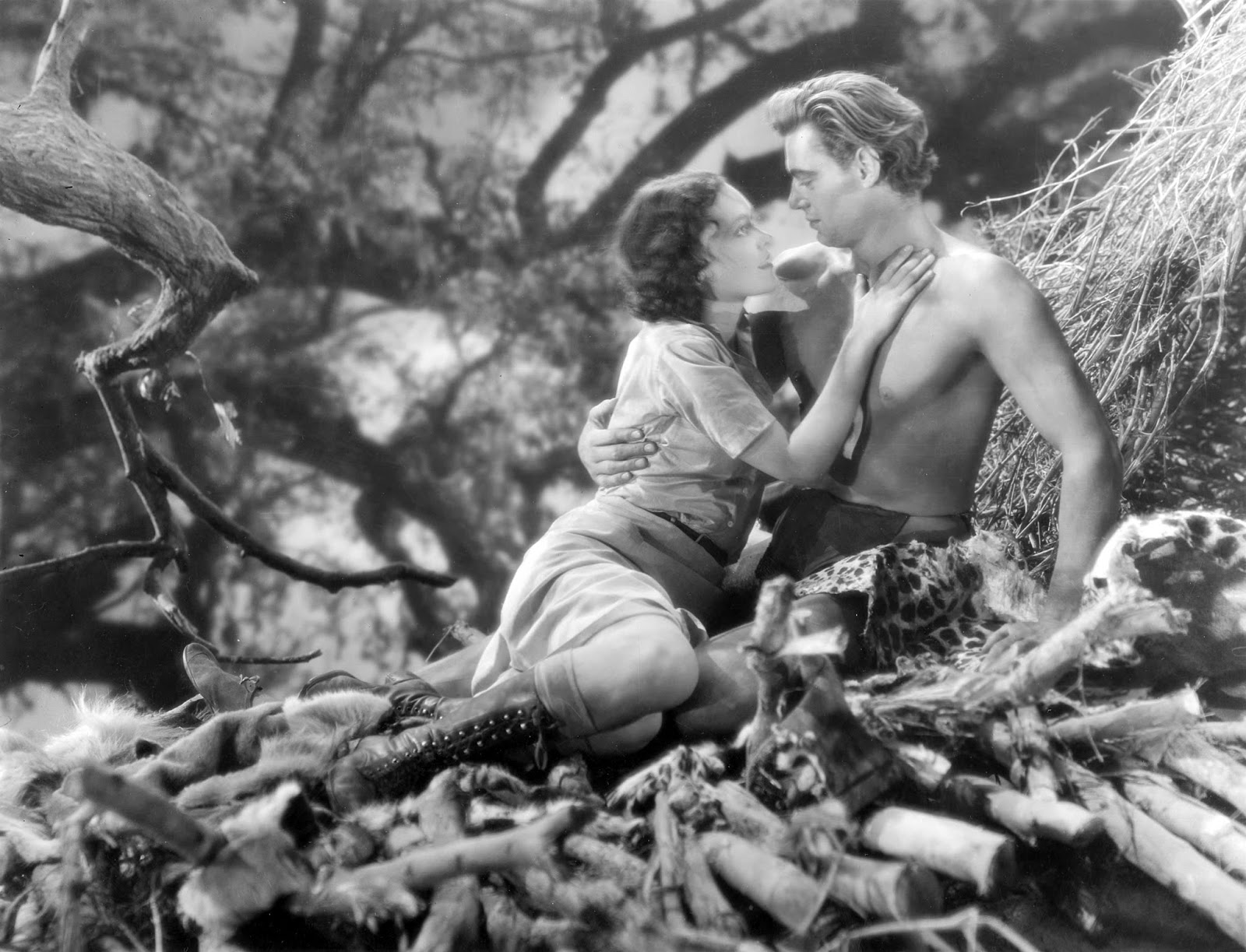
Tarzan: The Ape Man (1932) starring Johnny Weissmuller and Maureen O'Sullivan is a good reminder that the Hays Code didn't come into being until 1934. Pre-Code Hollywood was quite provocative and steamy and fairly unfettered, putting paid to the (irritating) assumption that the mores of a culture only work in one direction. (This assumption is why modern-day Progressives can go on believing that they aren't thorough Victorians.)  

Tarzan and His Mate (1934) slipped by (barely and some stuff was cut). By the time Hollywood reached Tarzan Escapes (1936) and Tarzan Finds a Son (1939), weird anti-body attitudes were in greater play. The last movie gives Tarzan and Jane a non-biological child (and O'Sullivan was pregnant at the time!). Because, you know, biological bodies having biological needs and actually accomplishing biological ends based on things like chromosomes and biological sex is soooo shocking!

Back to Tarzan (1932): Johnny Weissmuller, Olympic gold medalist (swimming), is frankly hot stuff, even now-a-days (what constitutes "good-looking" doesn't change all that much but what gets promoted does). Despite Maureen O'Sullivan's penchant for screaming, Weissmuller's Tarzan wisely takes her body language more seriously than her demeanor. She is very tactile, handling his bare legs and arms and chest without any maidenly qualms. She's more pissed (and at one point legitimately scared) than offended. O'Sullivan's unapologetic physical affection continues unabated through the initial films.

Johnny Weissmuller succeeds in large part because he has the innocence of George of the Jungle (Brendan Fraser) though he forgoes the smirk at the camera. As Taliaferro points out in his biography of Edgar Rice Burroughs, "Americans...viewed Johnny Weissmuller as the least inhibited man alive...Weissmuller...was clean-limbed in every sense. He gave the impression that he could have sold Bibles door to door wearing nothing but a G-string. Like Adam himself, he was naturally ideal and ideally natural. There was no hint of either embarrassment or braggadocio in his comportment." 

In fact, most amusingly, Weissmuller's Tarzan initially treats O'Sullivan's Jane with the good-natured curiosity of a teenage boy towards the new kid. At one point, he takes her handkerchief and tears it to pieces in sheer "hey, look, it rips!" adolescent mindlessness. Stick him in Toy Story and he is innocently blowing up GI Joes and burning ants (and showing off to the kid next door). 

This is Rousseauian innocence, not nature's innocence. Tarzan is surrounded by apes. Apes have sex. Not exactly a mystery. 

In terms of the primal relationship, Jane's screeching in the first movie gets irritating, but her pluck--which Maureen O'Sullivan captures exceedingly well--is refreshing. When she's allowed, she lets her voice dip and go husky.

Interestingly enough, from a feminist Rousseauian point of view, one gets the impression (especially in the second film) that her sudden adoption of helplessness and swooning fear is a cultural instinct, not an inherent one (and there might be some truth in that). As soon as the protective men disappear, she demonstrates that she is fully capable of outsmarting the lions on her own. 

And Tarzan never seems to assume that she can't--he rescues her because he loves her, not because she is lacking in self-reliance.

She also increasingly loses her clothes throughout the first movie. It's the hippie version of Bruce Wayne in Die Hard: her hat, then her shoes, then half her dress...

Clean porn. 

Well, that, and a National Geographic-like (and somewhat exhausting) medley of nature images (if the studio is going to pay for the stuff...). And chimpanzees. People just love their chimpanzees. 

The elephants are fairly impressive as well. 


Saturday, November 30, 2024

The Conservatism of Erotica: Reibun Ike's Series

The 2-volume manga series here is about men from a group of related islands--all with different economic specialties--who battle to be king of the island alliance.

They engage in a frankly biologically-based battle that comes down to who can get the other man to..."spill." 

I'm being coy because being more direct would turn this into a sex blog, which it isn't (precisely). 

The manga is much more direct, both visually and verbally. 

And the series is one of the most thoroughly conservative series I've ever read. 

It is also remarkably well-written. Not only are the characters given clear and memorable personalities and not only does each couple have its own arc--the arcs are connected to human behavior, culture, and the central conflict. 

The primary couple is Harto and Matthew. Harto attends Oxford, where he has to learn to dress somewhat differently. There he meets Matthew, his boyfriend-to-be. He isn't sure how Matthew will react to his cultural practices. Matthew, an anthropologist, isn't sure either. But he is able to make the leap from I'm may not like this personally to I'm not the issue here--he is a rather objective guy. 

Another couple, Vampir and Naga, have to deal with Vampir turning into a somewhat different person--due to his island's mystical practices--during battle. Where exactly does love begin and end when the issue is "you are the personality I want to be with"? 

And another couple have to deal with family members insisting that their marriage can't go forward unless the battle delivers a certain outcome. That particular storyline produces an examination of various cultural practices associated with permanent relationships, like who builds the couple's house and where.

And so on...

The series is truly remarkable and falls into erotica rather than porn because the set-ups are not merely excuses for characters to have sex or even loving dialog. I've read manga which were supposedly "cleaner" where I could never figure out whether the characters even had personalities, let along motivations for anything. But Reibun Ike's series is story--or, rather, a series of stories about characters and sex. 

In the end, how to be in relationships is what matters. And who people are--how they look, think, battle, and resolve problems--also matters. The physical is important. So is the emotional (feelings, memories). And fidelity is always on the table. 

Saturday, November 2, 2024

The Archetype of the Plain Girl

Also acceptable.
The Plain Girl is a common archetype in romances. The archetype has been done well, but I generally find it somewhat tiresome. 

To get the acceptable treatment out of the way, Mary Balogh's First Comes Marriage presents a plain girl as the primary female protagonist. The heroine has been told all her life how plain she is; instead of moping about, she adopts a pleasant and happy attitude. But after her marriage, a few incidents leave her feeling insecure. Finally, her husband says (I'm paraphrasing), "Look, I'm attracted to you. That should be enough. Let it go!" And she does!

Now, for the unacceptable: 

[T]he human race is broadly divided into
angels & trolls...the angels don't always get the
best of it; when [they] fall in love with each
other, they'd better be sure it's not because
they're beautiful people. When my wife and I
fell in love in 1953, we were both pretty ugly
customers. That's how we knew it was real.

1. She doesn't let it go.

One of the admirable aspects of manga is that despite the presence of enormous self-doubt, the resolution--quite often--is for the protagonists to get over it. 

That is, their self-doubt is a problem that others are NOT expected to solve. In Cherry Magic, Adachi's ability to read minds doesn't send him into a state of constant self-affirmation. Rather, it propels him to meet Kurosawa half-way.

Books where the heroine (or hero) is constantly being reassured result in a kind of  perpetual victimhood.

2. The plain heroine is paired with a handsome hunk, and the writer never lets us forget it.

What I dislike about this motif is that the authors don't play fair. There's a double standard at work where the heroine should be accepted for herself (her intrinsic character!) while she and every other character in the book continually comments on the handsomeness of the hunk: ooh, his rock-hard abs. Isn't she lucky that he loves her for her soul while she gets to love him for his body?!

Poor handsome hunk. (I have encountered the opposite--men who honestly seem to believe that they are owed a beautiful female companion because that is what men are wired to want; I generally don't feel bad for the female companions because I think they often know what they are signing up for. But I don't envy them.) 

I prefer romance books, where appearance is a non-issue because (1) the hero and heroine are both plain; (2) because the hero and heroine are both good-looking; (3) because "beauty is in the eye of the beholder" (people have individual and sometimes wacky tastes). In any case (and this applies to real life as well), everybody just shuts up about it and gets on with the plot.

I do find it notable that traditional romances and, for that matter, lesbian romances, fret about the female protagonist's appearance far more than male/male romances. In male/male romances, even if one male is supposedly plain, the issue almost always falls into #3 above. 

The reason is not because the physical has been abstracted. Quite the opposite! Attraction matters. So does sexual compatibility. Returning to the Plain Girl trope, women and attractiveness is a common topic throughout history and in literature. The need to explain (sometimes, defensively) the writer's choices is understandable if unfortunate. 

It does begin to wear. As mentioned above, the male/male romances I read generally solve the problem by physical passion coming down to "that's what I want" (see Ruin of a Rake above). If one wants an explanation for why so many women read the stuff...

Thursday, October 17, 2024

The Hero-Worshipped Lover: Hilarious Punch Drunk Love

The hero-worshiped lover is not quite the same as the popular lover. Quite often, as with Kurosawa (Cherry Magic) and Yuichi (Only the Ring Finger Knows), the popular lover is initially avoided or disliked by the protagonist until the popular lover shows his weaknesses. Adachi figures out Kurosawa's imperfections before they start dating--most of his later doubts are about Kurosawa's expectations, not Kurosawa's character. He is amused by Kurosawa's flawed romantic possessiveness, not upset by it.

The hero-worshiped lover, on the other hand, is craved by the protagonist because the lover is supposedly wonderful and perfect. 

That is, the pedestal is part of the (initial) attraction/courtship. Although series like My Beautiful Man are able to point out the unfairness of "you must be perfect" demands, many series that run with this archetype appear to remain on the worshiper's side. It's the ultimate fan experience: Isn't it great to get the hero's attention? Okay, now, the fan and hero will easily adjust to real life.

I find it creepy. Agatha Christie was right to present a worshiper (of her husband) as also the murderer of the thing she worships. The worshiper doesn't adjust to reality. The worshiper is entirely disillusioned and strikes out. 

The one major exception in my reading right now is the frank erotica Punch Drunk Love. Seon-woo is a worshiper. What makes the manga, at least Volumes 1 & 2, so funny, is that he isn't worshiping Tae-moon for the reasons Tae-moon suspects.

Tae-moon has been taken advantage of by praise-heavy sycophants in the past. He assumes Seon-woo falls into this category. Ha ha, he sneers. I'll take him to a scuzzy hotel. Then, I'll force him to crawl to me, etc. etc. 

Turns out, Seon-woo is so innocent (in some ways), he is thrilled by the hotel. Turns out, also, Seon-woo likes to be dominated during sex. Turns out, as well, that Seon-woo never imagined that Tae-moon was some sweet, good-humored, gentle soul (as Tae-moon portrays himself at work). He always thought Tae-moon was kind of a jerk. That's what he worships! Tae-moon is hot! He's got a great body! What's the problem?! ("Why would I care about your character?")

In fact, the manga heavily implies that Tae-moon is in greater danger of making Seon-woo out to be more of a good guy than he probably is--or, at least, more of a victim (he assumes that Seon-woo is unaware of his own good looks because Seon-woo was abused, not because he was raised by normal people--see below). 

The miscommunication is based entirely on stories each man has made up about the other. 

The outcome, so far, is Cary Grant-worthy farce.  

Bad eyesight. But they have no cavities!

*Note: I used the British "worshipped" for the title, and the American "worshiped" for the post.

Saturday, March 23, 2024

Complaints: PDA or Non-PDA Does Not Equal Ethics (Either Way)

Years ago, I knew a women with two kids under five. Her husband was a supremely nice guy who looked like a pirate or Loid from Spy X Family, only the husband was dark-haired. She was extraordinarily easy in her own skin--very relaxed--not at all prim and proper. 

And she disliked Personal Displays of Affection. 

She reminded me of Frasier who complains when he is expected to hug non-family members at work, just because it is their birthday. (See below.)

She was also a very straightforward person, so she would say, like Kitty in Elementary, "I'm still not a hugger..."

I'm saying this not because I'm a big hugger (or not) and not because I'm adverse to PDA in fiction. I'm saying it because I get highly annoyed when reviewers determine the moral worth of a piece based on PDA. PDA turns into (yet) another marker of something or other rather than a personal idiosyncrasy/choice.

I discuss elsewhere why I don't consider PDA or the disclosure of body parts to automatically be immoral. Here, I'm going to address the other side of the equation, reviewers who complain because characters don't kiss or don't kiss enough or kiss only when the screen fades to black. 

I don't mind a reviewer who says outright (and some do), "I love to watch people make out. It's great! Give me more!"

I dislike reviews which whine because the lack of kissing is repressed or homophobic or whatever.   

I read erotica and watch what Asian television deems "R" (by American standards, it is fairly PG). Again, I have no trouble with body parts. 

I also believe that particular pieces call for particular approaches. 

Filmed versions of Jane Austen have some excuse for PDA since Austen was quite deliberately letting behavior rest between the lines. But I don't hold the non-PDA versions against them. For one, Jane Austen was well-aware of sex scandals. She kept them "off-screen" in her books because they didn't interest her, not because she couldn't write about them. A movie that does the same matches her tone and focus. 

And two, writers who can't create sexual tension without resorting to lots of PDA aren't very good writers (or, to be fair, don't have very good actors). 

Tone and focus matter. Some reviewers criticize Yuri On Ice! for not showing the kiss "on camera." I consider these reviewers have entirely missed the point. One, the sexual tension between Yuri and Victor is so strong and so obvious...do viewers really need some kind of checklist? Not exactly "read between the bolded lines" aficionados, are they? 

Two, the show isn't primarily about the intimate relationship. It's about the relationship and ice-skating and ambition and other skaters. 

Such reviewers will applaud an anime that shows men kissing "for the first time"! And from an "art as social purpose" standpoint (which standpoint I personally detest--there are other venues for people who want to turn everything into a lecture), they can make a case. But if the anime with the kissing people is badly written and drawn (it isn't--it's Cherry Magic and is quite good...but...), then the anime doesn't get a pass.

Likewise, it shouldn't get criticized for NOT having PDA. 

The work should be judged for its entire self: tone, theme, plot, characters...that stuff, that literature and film stuff. 

Art still matters for art's sake. 


Tuesday, December 26, 2023

Chemistry Continued: Erotica and Keeping People's Personalities

A Thai drama Bed Friend and a Taiwanese BL drama Stay By My Side point to the difference between bland erotica and erotic erotica. 

Bed Friend is basically a friends-with-benefits-to-commited-lovers drama, and the audience is given many scenes of excessively toned young men kissing and caressing each other. 

It is hot but after awhile, it begins to feel like filler. 

I'm not a fan of Bed Friend mostly because I'm not a fan of protagonists who suffer from every single drama problem in the world: awful parents, pedophile relatives, cheating boyfriends, stalker bosses...I start to feel the same way I do when Christie movies reproduce all the murders within one of her books. In the book, all the murders make sense. On screen, they start to feel fake and contrived. 

The couple from Bed Friend have okay chemistry. But as I mentioned, after awhile, the make-out scenes leave me pondering the value of filler in producing series with way too many episodes: Ah, yes, time to pause and have the hot guys kiss and fondle each other.  

I watched Stay By My Side right after Bed Friend and was struck by the erotic delivery of the very simple scene where Buxia and Jiang Chi kiss while Buxia's eyes are covered. 

And I began to ponder the difference. 

I concluded that chemistry in make-out scenes comes down to personality--that is, the best erotica preserves the characters' personalities during those scenes. 

Semantic Error

Semantic Error tends to stand above the rest anyway. But it is helped by the two protagonists entirely remaining who they are during the make-out scenes, so much so that Jaeyeon and Sangwoo's kiss at the restaurant occurs after Sangwoo heaves an enormous sigh about how complicated his life has gotten. After the kiss, "my life must have order" Sangwoo bolts; Jaeyeon mutters, "That damn punk" and goes after him. 

Chance to Love

Can and Tin again--they strike me as almost entirely unique since they don't deliver the usual "look at the heavy make-out session" scenes, even in the bedroom. It's hard to know if the decision here was the director's or the actors' but they don't behave quite like anyone else, not even characters within the same series. (At the risk of getting salacious, Tin tends to go for the neck rather than the lips, which is a difference in and of itself.) 

Love is in the Air

The erotica in Love is in the Air comes the closest to HBO (none of these BL shows approach the raunchiness of American cable television). The two young college students are quite assertive in the make-out sessions, and I find the psychology behind Sky's behavior quite believable. 

Sky fell for a older man when he was a teen. While he remained innocently convinced of the older man's know-how, it is obvious that he almost immediately proved himself far bolder in the bedroom. Any other boyfriend would have been thrilled but the jerk boyfriend turned to sadistic game-playing to keep Sky in his place. 

Sky's current boyfriend, Prapai, not only can keep up with Sky, he feels no competition with the slightly younger man. He is gratified and enchanted by Sky's physical passion, not resentful. Psychology here plays a role.

Dear Doctor

Dear Doctor is the most focused on an evolving relationship. Like with My School President, the closeness between the characters is so apparent in the early episodes, the later intimacy is entirely natural show-no-tell. The easy affection between the characters remains their most telling characteristic. 

The make-out scene is erotic, however, since the characters seem entirely indifferent to the audience. That may sound like an odd evaluation, but I'm reminded of Notorious: Devlin and Alicia are wrapped-up in their own world as they make-out, all while Devlin is on the phone. Everyone and everything else is mere noise.

Far too much erotica feels like it is being timed--and presented for approval. It is happening because the script says so, not because the characters naturally went in that direction. 

Good erotica deceives its audiences better.

Saturday, September 9, 2023

Sleeping Together in Romances

Many romances have comedic, exuberant, and touching scenes where the couple figure out how to sleep together.

And I mean, sleep--as in snooze, drift off, get some shut-eye, rest, enter REM state, dream, be out like a light, and so on. 

As Time Goes By: Early on, Lionel and Jean discuss which side of the bed each member of the couple should sleep on. In fact, the writers switch their "sides" between episodes. Jean ends up on the left side (facing away from the headboard) since it places her nearer the bedroom door, which makes sense in terms of the script: she is more likely to speak to people entering the room while Lionel grumpily tells them to go away. 

Becker: After Becker and the friendly, optimistic Chris get together for the first time, they try to cuddle. But neither one of them is totally on-board, so they end up on opposite sides of the bed: see the mini-slideshow below.

Frasier: Turns out, Daphne is a thrasher. Her night time sleeping habits are so rambunctious, Niles can't stay on the bed! He solves the problem with a mattress on the floor.

Cherry Blossoms After Winter: Seo Hae Bom and Jo Tae Seong move in together when they get to college. Their sleeping arrangements the first night are showcased in a cute and funny clip

The result with Cherry Blossoms is very sweet--but in truth, Becker is far more normal. Separate beds is not as uncommon as people imagine with couples. The Hollywood arrangement may have been brought about by the Hays Code but it reflects reality more than most television admits.