Showing posts with label Sitcoms. Show all posts

Thursday, May 14, 2026

The Omniscient Lover: Bad Writing However Desirable

On Votaries, I comment on the problems caused by omniscient detectives.

Omniscient lovers cause equal problems. The best romances, though they may involve rescues, provide lovers who improve. Darcy learns to communicate outside of his man-cave. Elizabeth learns that she may--despite her quickness of thought--misjudge situations. They come to an understanding.

The omniscient lover overrides all that. This lover may sometimes express doubt, may occasionally--after knowing exactly what the significant other wants, borderline stalking the significant other, arranging the significant other's life--say, "But if you don't want to--"

But such token "I guess you have free will" statements don't suggest a personality in need of transformation or adaptation. Such lovers are rather dull.

However, I do understand the creation of the omniscient lover better than the creation of the omniscient detective--why it is such an attractive proposition. I believe that at the back of original sin or the natural man--the stuff that leads people to behave stupidly and meanly--is a desire for ease, for guarantees, for absolute and all-encompassing answers.

Life is just so hard! And people often wish it could be simpler. Label the bad guys. Force the perfect utopia on people. Go with the latest peer pressure/trend.

Dorothy Sayers called this behavior "snatch." And it's understandable--even if wrong (and explains the number of people who have convinced themselves that Chat GPT "borrowing" other people's work for their benefit isn't lazy, short-sighted, and unethical: what will humans do when the work becomes one mass of circular reasoning?)

In romance, searching and dating and breaking up and searching and dating and trying to make a relationship work is hard. It's exhausting. It's understandable that people sometimes fall back on a trope where the desired partner simply makes it happen.

Of course, few people truly want that "simple" solution when it does appear.

Monday, January 19, 2026

The Great Major Margaret Houlihan

I mention on Votaries that Major Frank Burns had more potential than the writers allowed for. 

Apparently, Loretta Swit objected to her character's ongoing affair with Frank. (Maybe Swit did; maybe she didn't--what gets reported isn't always accurate).  

In any case, I've always considered Major Houlihan one of the great female characters of the 1970s. She doesn't spout off the correct-sounding stuff. She is a full character with layers. And I never had any trouble understanding why the seemingly tough and ambitious Houlihan would have an affair with Frank. 

First, she likely isn't as interested in marriage as she thinks she should be--she is a product of her time period, and a woman in the military is still an outlier. She sees friends getting married and settling down and having kids. She would hate that life, but a part of her thinks she is supposed to love it--until an actual marriage fails her. 

Second, a person can be savvy and hard-headed in one area yet a fool with romance. She marries a jerk--in fact, she acknowledges at one point that Frank was better than her cheating husband, Lt. Colonel Penobscott, who was entirely shallow and fell short of Frank's devotion.

Third, she isn't stupid--the obvious person for her to hook up with his Hawkeye...and they would kill each other in a fortnight (as the episode when they sleep together proves). Hawkeye is too cynical. He is also, work-wise, her mirror. She doesn't need a mirror, and Hawkeye isn't comfortable with one (as the episode with a female surgeon proves). 

Fourth, Houlihan has enough self-knowledge to understand herself regarding Frank. To him, she states, "You were military issue. I got you with my mess kit and khaki girdle."

Consequently, I wouldn't pair Frank with Houlihan in the long run. I would have them become good friends who can confide in each other. But Frank is looking for a wife--and, as stated above, Houlihan isn't necessarily looking for a husband, even if she thinks she is.   

The above analysis is based on the character--what she does, what she says, how she says it. The complexity and strength is there!  

Fantastic character! And excellently acted!  

Wednesday, September 17, 2025

Productive Delinquent Relationships

A variation on the "rake" is the delinquent. Delinquent romances fall into two categories: the clean-cut lover + a delinquent; two delinquents together. 

Delinquents together is particularly charming. (In this case, I using "delinquent" in the "not good at school" sense.) 

In Family Ties, Nick and Mallory are impressively functional. Neither is good at school, and Nick dropped out before they met. However, like Kyle from Last Man Standing (see below), Nick encourages Mallory to attend college. Both Nick and Kyle are inherent gentleman who put another's welfare first. They are also both wise about life if not about books. 

In both cases, the drop-out is encouraged to complete a certain level of education. Mallory gets Alex to help Nick achieve his G.E.D., which in the 1980s was enough to move Nick up the socio-economic ladder. (Nowadays, Mallory would get Alex to get Nick to complete a trade certificate, and Nick would go on to make more money than everybody else in the family.) 

Speaking of changes in educational expectations, Kyle--who exhibits impressive and believable growth throughout the Last Man Standing series-- eventually commits to going to college because he wants to become a pastor and needs an education to serve in the places he wants to serve. Both he and Mandy acknowledge that getting a degree is going to be hard for him. He is not naturally academic, but he is exceptional with people and is willing to undergo the potential ordeal of getting through the necessary classes. 

As an English instructor, I admire the reality check here: education is hard; it isn't supposed to be easy, and it isn't unfair that it isn't easy. 

Nagisa from Nagahama to Be or Not to Be by Scarlet Beriko is a high school student who doesn't know what he wants to do with life. He gets good grades but ACTS like a delinquent who is about to give up. He gets upset, however, when Issa, his friend (and eventual boyfriend) does supposedly give up. Issa drops out because he knows that he wants to be a fisherman and he knows how to make it happen (by joining a deep sea fishery for six months). In this case, the supposed delinquent-but-not-really behavior becomes a wake-up call for Nagisa who goes on to discover what he truly cares about. 

The problem with any relationship is that one person can pull the other down. In the above cases, the couple buoy each other up; the relationships have the potential to last because they are productive. 

These delinquents don't want to simply sit around smoking weed and contemplating the nature of mooching. They are consequently more interesting. 

Tuesday, August 12, 2025

Perpetual Bachelors: Trope and Stigma

Nero Wolfe is a perpetual bachelor. Perpetual bachelors are a longstanding tradition in literature, from PG Wodehouse's upper-middleclass men fleeing from marriage to Sherlock Holmes with his bromantic partner. 

Nero Wolfe falls in the subcategory of "perpetual bachelor who has been around the block." Tom Selleck's Frank Reagan also falls into this category. Although Frank is surrounded (quite literally) by family, he remains unattached. He had a marriage. He has kids. He doesn't want to go back or start over or move on to something else. He and Henry, his father and a similar type of perpetual bachelor, have an honest conversation with Danny about their disinterest in marrying again. Danny also lost his wife but he doesn't see his father or his grandfather as people to emulate--in their relationships, at least. 

Regarding Nero Wolfe, hints in the books and shows suggest that Wolfe had passionate causes and relationships in his past. He now wants a life of order and comfort. 

PG Wodehouse's bachelors are less excused. Although the stories applaud Wooster each time he escapes his aunts' marriage plans, Wooster himself is portrayed as a less self-aware Wimsey: a young man with no real objective in life, flying from responsibility. Jeeves is perfectly willing to assist since Jeeves prefers the good life of caring for a single unencumbered individual than for a household. 

The modern, American equivalent of Wooster is the-guy-in-the-basement-playing-video-games-and-still-living-with-his-parents.

So there is a stigma attached to bachelorhood. However, it has never been as great as the stigma attached to "spinsters." Consider Vance's cats. Even the footloose and fancy-free spinster bears a greater stigma than the male variety. So Michael Weatherly's Tony (NCIS) is a fun-loving womanizer who simply hasn't found the right girl yet while some of the characters from Sex & the City strike even me as kind of skanky and stupid. In fairness, Blanche from Golden Girls, though often called "skanky" by others, comes across as a pragmatic woman who enjoys life and doesn't see the need to apologize for her forms of entertainment. (In so many ways, Golden Girls was ahead of its time and today's time.) 

Still--the idea that men sow wild oats while women fail to fulfill social responsibilities lingers. 

Overall, stigmas exist regarding both male and female singles. And those stigmas can increase for men and for women depending on a culture. That is, some cultures will criticize the single male more while others will sneer more at the single female.

Personally, I'm a fan of pluralism. Not "diversity," in part because the term has bullying connotations these days that I don't agree with. I don't agree with people being applauded for their differences. I believe in people being left alone to enjoy their differences. I live in a neighborhood with single people and married people and living-together people and people-with-kids...we get up, we go to work, we go to play, we go shopping. That's life. 

So if people are happy in a basement, why shouldn't they hang out there? 

Friday, February 14, 2025

Valentine's Day Massacre on Valentine's Day

On Votaries, I discuss how I don't see Valentine's Day as personally threatening, despite being a single woman.

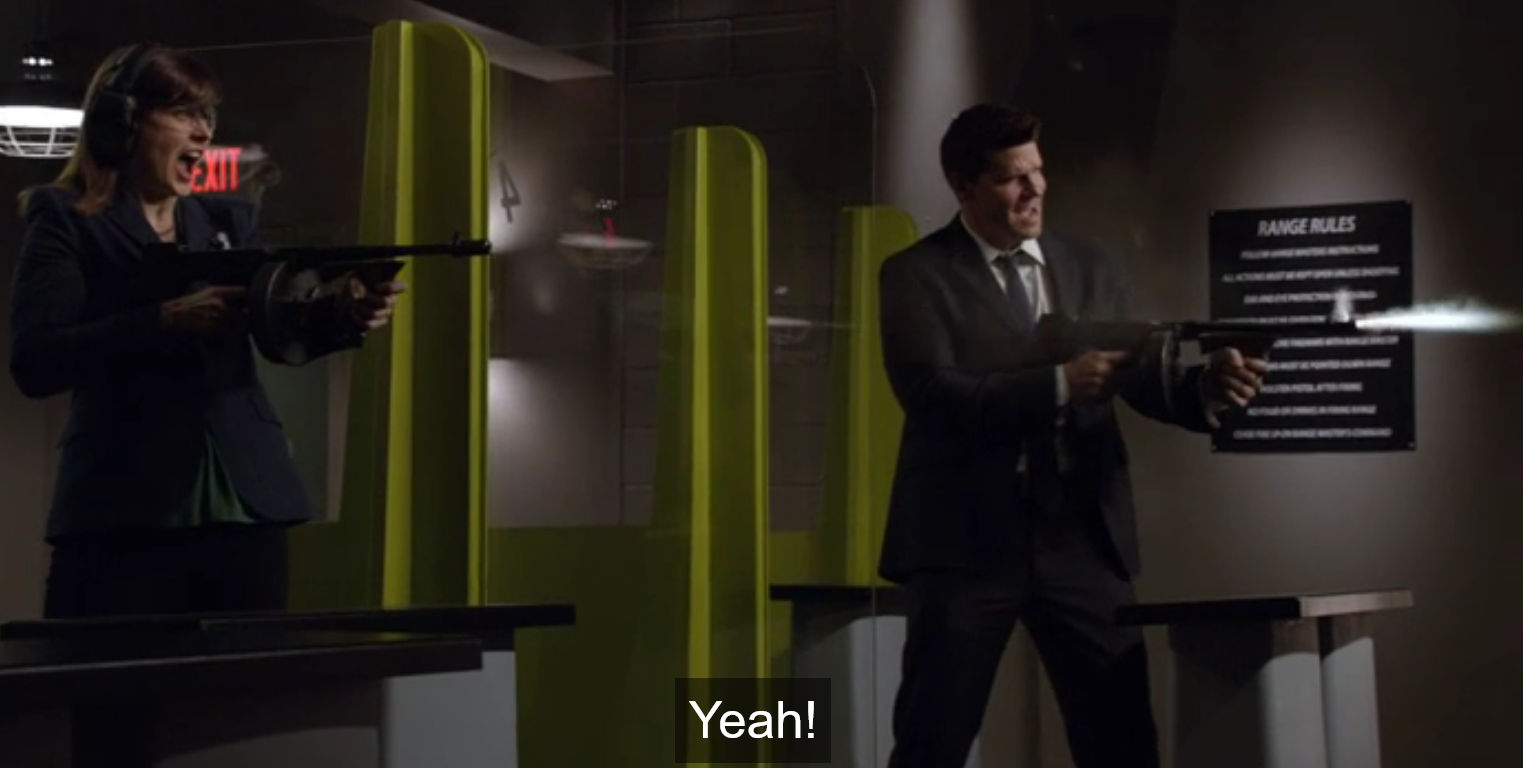
I admit, however, that I do find the anti-romance trope occasionally amusing. I can think of two shows, immediately, that tie Valentine's Day, the romantic holiday, to the Valentine's Day Massacre. (In many ways, the violence here is appropriate. Saint Valentine is said to have been killed by being beheaded.)

In Bones, Brennan celebrates Valentine's Day with a heartbroken Booth by "borrowing" machine guns from the relevant exhibit at the Smithsonian.

In Golden Girls, Sal and Sophia nearly run into the famous American Valentine's Day Massacre. The lovable Sal shows he still remembered the romantic holiday when he gives Sophia a heart-shaped box of chocolates. 


Thursday, July 25, 2024

Everybody in Romance Needs a Job: But Not Massage Therapist

"Massage Parlor"

A common trope in romance is the taboo relationship: professor and student, boss and subordinate, step-siblings. They resist and resist and resist...right up until they fall into each other's arms. 

It's a fun trope and can work quite effectively.

The taboo relationship of massage therapist and client never works.

The taboo is that massage therapists are not supposed to sleep with their clients since massage has commonly been associated with "happy endings" and prostitution (see Barney Miller). In much the same way that W.S. Gilbert improved the reputations of actors and actresses by insisting on separate changing rooms in the theater, massage therapy battles a reputation that only discipline and legal standards can overcome.

Consider Phoebe, from Friends, getting fired for kissing a client, who turns out to be a married jerk. Phoebe doesn't protest the firing. She knows she crossed the line. 

The few romances I've read with massage therapists have made token protests about unfair attitudes towards massage therapists...right before the protagonists fall into each other arms on the massage table. In one not-so-awful novella, the front desk administrator does threaten to take legal action, mostly because she doesn't know how to bill the insurance company. 

But it was still rather pointless. The massage therapist has a client and  they shouldn't sleep together and then...they do. So?

Restraint, in this case, would be far more interesting.  

Saturday, December 23, 2023

Relationship Advice for Fictional Couples: Perry and Jordan Cox

So regarding the problem of two critical alphas going at each other, can this type of relationship work? 

Sure!

Gottman points out that "critical resolution" techniques, so praised by marriage therapists, largely don't work because successful couples don't actually solve their troubles that way (and most troubles are, in fact, unsolvable). 

Referring to one exchange, he points out, ["Charlie and Belle] have been having similar in-your-face discussions for years. They don't end angrily, either...There's a lot of affection and laughter as they hash this out...Clearly, there's something very positive going on between them that overrides their argumentative style." (13). 

In other words, rather than contempt, the couple fall back on affection and laughter.

Between Dr. Cox and his wife/girlfriend/ex-wife/wife Jordan, (1) Jordan's no-nonsense attitude means she is more likely to tell Dr. Cox to cut his crap than to challenge him to death and (2) they both have a sense of humor.

Romance novels throughout the 20th century are surprisingly lacking in humor (I exclude Heyer). I think part of this was the writers, but I think part of it was the industry. Romance readers nowadays pretty much expect humor in their romances from Family Ties cuteness to hilarious banter of Powell as Loy as Nick & Nora.

And it is far, far easier to take pushiness when everyone throws up their hands and laughs at the end of the day.

Monday, November 20, 2023

Better in Fiction Than In Real Life: The Hopeless Romantic

Kurosawa to the right--look at that happy face!
It's hard to see the downside to the archetype of the hopeless romantic (but see below), especially since it is so entirely cute. 

Kurosawa from Cherry Magic is a hopeless romantic. He has spent most of his life being approached by women because of his looks. While he hasn't become cynical (he is far too well-balanced mentally to complain about being handsome), he is a little jaded...until he is bowled over when Adachi (before Adachi can read minds) helps him out after a company dinner. 

Kurosawa is invited to the dinner for his looks, Adachi for his youth. Kurosawa prepares to meet the company head by looking up background information and memorizing products. Turns out, she just wants to chat and flirt and tease the eye-candy. Kurosawa gets drunk--after finishing off Adachi's alcoholic beverage--and is mocked by his seniors: "He had one job to do--to look handsome--and he couldn't even do that."

Adachi trails after Kurosawa to make sure that he doesn't fall into a fountain or something. Adachi then delivers one of Adachi's low-key speeches that makes clear that Adachi (1) noticed what Kurosawa DID rather than how he appears; (2) finds Kurosawa's imperfect side "refreshing" and quite amusing.

Kurosawa falls for him to the nth degree. 100%. No doubts. No take-backs. Over the moon.

Whether anything would have happened between them if Adachi hadn't gained the ability to read minds is anyone's guess. 

In any case, Adachi's mind-reading confronts him with Kurosawa's hopeless romantic side--that is attracted to Adachi's "bed head," that imagines over-the-top dating scenarios, that takes way too many pictures and videos of Adachi, that buys him stuff and bought him stuff even before he and Adachi started dating. 

Adachi is daunted, amused at the "mushiness," and touched. 

Earlier scene that shows Kurosawa's
heartache.
Adachi also becomes aware of the pain felt by a hopeless romantic and moves to (try to) meet Kurosawa half-way. One of the most heart-breaking moments in the series is when Kurosawa confesses and then tries to reassure a flummoxed Adachi that everything will go back to normal. Adachi has (over) heard enough of Kurosawa's thoughts by this point to know that Kurosawa is bluffing and forces himself to make a concrete decision.

Cherry Magic handles the hopeless romantic with gentle insight. Frasier shows us what happens when the hopeless romantic goes WAY too far. Frasier feels left out when Niles and Daphne begin to date. He tries to match them by fast-forwarding a relationship with the next woman he asks out: we met...now, here are five bouquets of roses, a string orchestra under your window, video chats every day, a personal song tribute...

And it backfires. She dumps him. 

In comparison, it helps that Kurosawa not only restrains himself but has an objective side. 

Hopeless romanticism is enchanting to watch but the truth is, I kind of understand Larry from Numb3rs a tad better: Every Wednesday is lunch...every alternate Thursday is...you get one wild card...notice must be provided...

Kurosawa is thrilled to get a present on Valentine's Day
from Adachi--and he eats the chocolates even though
they are too spicy and Adachi tries to stop him.

Saturday, September 9, 2023

Sleeping Together in Romances

Many romances have comedic, exuberant, and touching scenes where the couple figure out how to sleep together.

And I mean, sleep--as in snooze, drift off, get some shut-eye, rest, enter REM state, dream, be out like a light, and so on. 

As Time Goes By: Early on, Lionel and Jean discuss which side of the bed each member of the couple should sleep on. In fact, the writers switch their "sides" between episodes. Jean ends up on the left side (facing away from the headboard) since it places her nearer the bedroom door, which makes sense in terms of the script: she is more likely to speak to people entering the room while Lionel grumpily tells them to go away. 

Becker: After Becker and the friendly, optimistic Chris get together for the first time, they try to cuddle. But neither one of them is totally on-board, so they end up on opposite sides of the bed: see the mini-slideshow below.

Frasier: Turns out, Daphne is a thrasher. Her night time sleeping habits are so rambunctious, Niles can't stay on the bed! He solves the problem with a mattress on the floor.

Cherry Blossoms After Winter: Seo Hae Bom and Jo Tae Seong move in together when they get to college. Their sleeping arrangements the first night are showcased in a cute and funny clip

The result with Cherry Blossoms is very sweet--but in truth, Becker is far more normal. Separate beds is not as uncommon as people imagine with couples. The Hollywood arrangement may have been brought about by the Hays Code but it reflects reality more than most television admits. 


Monday, August 14, 2023

Great Quotes About Mixed Emotions

The first comes from Golden Girls: Blanche's speech about "the color magenta." 

Dorothy is trying to explain to Blanche that she is upset and she doesn't know why--in fact, she isn't even sure if she is fearful or jealous or mad or something else.

I love Blanche's response (see video below). It is such a fantastic encapsulation of why emotions don't remain in tidy boxes and why emotional intelligence is not about having the right emotions or expressing the right emotions but about being able to handle whatever the emotions are, as Blanche does.

The second quote comes from My School President, episode six. By this point in the series, Gun is fairly certain that the person Tinn likes in the music club is him. There are no rivals. For that matter, there's no push-pull. Tinn is totally committed. And Gun is interested but wary.

As well as push-pull (I like you-I don't like you-I like you-I don't like you), the series also avoids the revolving door relationship, which latter trope is fairly detestable. Nor is Gun a particularly self-doubting person. That is, he doesn't sabotage the relationship with his angst. By episode 7, the relationship is a known reality between the two.

However, the lack of rivals and angst doesn't preclude some doubts, and I love the way Gun phrases his doubts. He knows and doesn't know. He is sure and not sure at the same time. He can't read minds (and if he could, it might not help!).

Thursday, December 29, 2022

Eroticism versus Porn

Explicit sex--high romance
Physical intimacy appears in romances in three different ways:

1. Off-screen or indirectly described

2. Porn

3. Eroticism

The oddity here is eroticism. On the surface, eroticism and porn may seem indistinguishable: they both rely on a degree of explicitness. The difference comes down to a point C.S. Lewis made about jokes and sex. In The Screwtape Letters, he compares two categories of people:

People who tell jokes about incongruities because they give rise to discussions of sex.

People who tell jokes about sex because they give rise to incongruities. 

Porn falls into the first category; eroticism into the second. 

The downfall of porn is not simply Provenza's criticism in Major Crimes (pizza never gets eaten; refrigerator never gets fixed). Some porn can actually deliver narrative arcs. But the arcs are flimsy pretenses. Worse, as Agatha Christie pointed out, there's a remarkable lack of real humor. Lady Chatterley's Lover is achingly dull in its characters. 

Eroticism, however, will talk about sex in order to talk about the oddities of human nature. Aren't humans hilarious?! Fumi Yoshinaga's more explicit manga is almost cynical in its amusement at human beings' foibles.

In sum, Golden Girls--at a relatively mild level--is erotica. Discussions of sex turn on how different and funny human beings can be in relationships, the bedroom, the grocery store, the restaurant, the car...

Cheers is frankly borderline porn. The jokes are often funny because they are raunchy. Well-written but rather tedious after awhile.

Frasier is all clever misdirection. Watch out for the opening episode set-ups, whether the topic is romance or caviar. They pay-off later, sometimes with a single line!

Wednesday, September 21, 2022

Golden Girls: Class in America

Marxists get upset these days because the folks they thought were on their side, the academics with their theories and labels, have retreated into near-Victorian elitism (with far more pretense than the Victorians). That is, calling someone the wrong label or pronoun--showing a bit of ankle--has become more horrific than, say, keeping kids in school, funding rehab programs, and getting people registered to vote. 

I'm not a Marxist--I think it misses way too much about basic human nature to be a palatable theory. But it does get one thing right. 

Class has impact. 

In my undergraduate program, an instructor had us watch The Story of English, the PBS miniseries from the mid-1980s. I currently own the program, purchased through eBay. 

In one episode, an executive-type woman from New York tells a story about her engagement to a man from the South. In New York City, his accent was there but softened by the acquirement of Northeast speech patterns. She went home with him for a weekend. The closer they got to his hometown, the stronger became his very Southern accent.  She felt like a stranger had crawled out of the man sitting beside her in the car. The engagement didn't last. 

I'm not saying she was right. I'm saying, "Wow! Talk about honesty!" 

Because admit it or not, human beings make these judgments all the time. They may call them something else. They may pretend they are something else. But class--the expectations of class (blue-collar, middle-class, elite)--the associations of that class with certain choices and attitudes regarding education, lifestyle, politics, religion, child-rearing, entertainment--are immensely strong. 

The strength of those expectations doesn't always leave people open to the "other." Hence, the tendency for elites in America to cry "mea culpa" while keeping a quite literal distance from the people they claim to feel for. 

In Golden Girls' episode "Diamond in the Rough," Blanche, the romantic, gives up a great (and gorgeous) guy due to class distinctions. Rose and Dorothy tell her she is an idiot. And Blanche is not proud of herself. But she doesn't lie to herself either. 

Courtship is, to a degree, always going to be based on "I think I know what I'm getting" (even if nobody really does).

Friday, September 9, 2022

Golden Girls' Couples: Rose and Dead People in Blanche's House

Rose's husband died after suffering a heart attack during sex. 

During Season 1, one of Rose's boyfriends, Al, dies after spending a night with Rose. She discovers that he wasn't single, as he claimed, but married. She visits the wife and tells her the truth. 

During the episode, Blanche tells the story of when she learned of her husband's death. It is a blunt recital--with jokes, of course--that addresses the reality of death occurring as life goes on. 

The entire episode has a strong Fall of Icarus flavor. Icarus falls. The farmer plows. The ship sails. The boy whistles. Life continues. It can't stop.

One of Golden Girls' strengths is this realism about life's bodily functions. With Rose, sex and death get combined. 

And jokes--since Rose ends the episode by (temporarily) convincing Blanche and Dorothy that she killed off several more men during sex. 


Tuesday, August 16, 2022

Golden Girls and James Frain: the Pain You're Familiar With

In The Closer, "Critical Missing," James Frain as Paul Andrews delivers the virtuoso performance of a cruel and dangerous man who keeps killing his imperfect wives, then burying/disposing of them where he and the wife married.

During the nearly episode-long interrogation, he presents himself as astute, self-reflective, and entirely innocent. In one of his justifying speeches, he states the following:

"Someone...I think it was my first Latin master...he told me that if you were locked in a library of the world's miseries, you would be led inexorably to choose your own because it's the pain you're familiar with." 

It's a great passage from a serial killer--like all great passages by evil characters, it contains a kernel of truth. 

A very young Clooney is on the bed.
Golden Girls highlights this truth. Dorothy complains about not getting dates/meeting decent guys, yet when, in Season 2, she meets a great guy, a police detective who is using Blanche's house to spy on the neighbors, she dumps him when he gets shot at (his partner is wounded). She just can't handle the worry. 

Her decision is a legitimate assessment of being the spouse of someone in a dangerous profession.

Nevertheless, the viewer sighs: When will Dorothy stop bouncing between deadbeat Stan and great guys she ends up dumping for ridiculous reasons? 

Except her behavior is entirely believable. It takes her 7 seasons to finally dump Stan completely and accept a good relationship. She chases the familiar. As Frain's character argues, the familiar--even the bad familiar--is comfortable, known, manageable (been there/done that).

The key, perhaps, is to do as Doc does in Hide & Seek: Instead of fighting one's inherent nature, find the variation-on-the-familiar-theme that works

Monday, August 8, 2022

Golden Girls: Love is Funny

Golden Girls is my "everybody is aging, including me" therapy. I relate to the main characters' thoughts on aging. I relate to their thoughts on their elderly parents. 

One aspect I appreciate the most is that although love is a serious possibility for these older women, it is also a source of amusement! They have moved past the Romeo & Juliet stage (thankfully). Dating is funny. Sex is funny. Significant others are funny. 

This may seem standard fare in sitcoms--but truthfully, sitcoms often take relationships very very seriously. Humor is attached to the idiosyncratic lovers, not to the dating itself.

The humor in Golden Girls is not snide--ha, ha, older women in love. It is based on experience. Been there, done that. 

One of my favorite examples takes place in Season 1. Blanche is on an airplane with her wealthy boyfriend, who intends to propose. In the middle of his deep thoughts, Blanche hits the wrong button on her chair and it collapses backward. While her date meanders on, she desperately feels around until she finds the button that lets her sit upright. Only slightly flustered, she accepts the glass of champagne.

A younger character would be revealed as foolish. 

An older woman gets herself situated and poised before her embarrassing escapade is discovered. 

It's an utterly hilarious scene.

Monday, August 1, 2022

Golden Girls' Couples: Dorothy and Her Ex-Husband

Dorothy is the archetypal smart, accomplished woman who keeps dating losers. 

She married one, who left her for a stewardess. The husband, Stan, is excellently played by Herb Edelman. And he is a jerk. But he is a jerk in the Babe Ruth-sense, not the con-artist sense. That is, he is natural man without the pride. He committed adultery during his marriage because, well, the women were there--and they said, "Yes." He invests in any idea that comes along. He is the exactly the kind of guy to get his girlfriend pregnant, get married at the insistence of the parents, and then slump through life waiting for life to...keep being life. 

"Why did you ever marry him?" Blanche asks Dorothy at one point.

The brilliance of Dorothy and Stan, however, is that despite the divorce, they carry with them the same patterns of married life, good and bad. There's a reason why counselors instruct divorced couples not to date each other again. The familiar is security, comfort, surety. It is tempting. And Stan, despite his choice-less life, has a fuzzy likability, due in large part to the actor. And Dorothy, despite her outspokenness, needs seven seasons to finally take responsibility for her dating choices.

Dorothy and Stan should never have gotten married. But it's understandable why they would function well together anyway, at least long enough to raise a few kids to adulthood, and why they keep coming back into each other's orbits.  

Tuesday, July 12, 2022

Golden Girls' Couples: Rose & Miles

In real life, Rose would have remarried within a few years of her husband's death. 

She loved Charlie. She loved being married. She's a comfortable woman who attracts with little effort the kind of men who also want to get married again (the anti-Monks). She corresponds quite well to Christie's description in The Body in the Library of Addie Jefferson:

"She's the kind of woman," said Miss Marple, "that everyone likes. The kind of woman that could go on getting married again and again. I don't mean a man's woman--that's quite different." 

Consequently, unlike with Blanche and Dorothy, Rose's continual singlehood is not entirely realistic. Sitcoms falter on this edge: the same people in the same location go through stuff and joke about it. Nobody moves on or marries. Nobody gets their own place. Permanent lock-down. And it's not entirely believable.

Intelligently, the writers eventually give Rose an ongoing, steady boyfriend, Miles, played by the excellent Harold Gould. 

Harold Gould shows up early in Season 1 as a different character, Arnie, with a similar personality and back-story to the later Miles (aside from the surreal witness protection plot). It's a great example of the needs of chemistry--the actors work well together--outweighing the issue of continuity. He was the right guy to bring back as the "steady."  

Monday, July 4, 2022

First Two Dads on Television!

 Yup, it was on Andy Griffith

Okay, I don't know that for sure. My knowledge of classic sitcoms begins with Andy Giffith and ends with WKRP in Cincinnati before moving on to Tim Allen and Frasier (with a stop at Golden Girls and Family Ties).

But Season 2 of Andy Griffith presents a delightful episode in which Barney and Andy deal with Opie being bullied. It is resolved with a trope that has since fallen somewhat out of style: Opie learns to stand up for himself when his father doesn't intervene to stop a fight. Rather, Andy encourages Opie to defend himself physically (even Num3rs presented this trope in a positive light; Ryan from Last Man Standing, of course, would totally object).

The problem is handled by Andy and discussed with Barney. They function as dual parents throughout the episode, even to the point where Andy questions his own advice in front of Barney. Barney is concerned, supportive, and less bombastic than usual. At one point, Andy warns him not to go off and interfere (attempt to helicopter parent).

The entire episode is helped by the (seemingly platonic) vibe between Griffith and Notts. Chemistry always helps, whatever the message.   

In a later episode, Andy and Barney join Opie's club, just as good dads would! 

Saturday, June 18, 2022

Golden Girls' Couples: Blanche

The pilot episode, "The Engagement," establishes that Blanche is a romantic. 

Blanche's marriage was a love-match to a man with a marvelous voice (played by George Grizzard). In the years since he died in a car accident, she has dated man after man. Although she has a reputation for being "loose," she is far more discerning and careful than she presents herself. 

Rather like Dean, who scorns God because he feels threatened by his own disillusionment, Blanche treats relationships as fleeting because at heart she wants another "one and only" relationship. 

Only, when she actually does get close to the altar, she ends up with duds. The one non-dud (see Season 2), she dumps. 

Arguably, Blanche knows she can never have what she had with her first husband. So she sabotages herself. The pursuit of romance is her coping mechanism.

And hey, that pursuit provides a continual string of plot points!

Tuesday, May 17, 2022

Love the Inner Geek on Last Man Standing

Last Man Standing delivers an episode in which the following occurs:

CeCe, played by the talented and hilarious Melissa Peterman, confesses to Joe, played by the entirely awesome Jay Leno, that she is really a cat lady who likes to stay home. Since he "googled 'rave' and it scared [him] to death," they decide to go off and have a coffee somewhere.

Meanwhile, Ryan and Kyle, who love to talk about geeky stuff, have a falling out until Jen gets them back together. They start arguing about Frankenstein and then decide that if Frankenstein "made a man--why wouldn't he make a dog?"

And the hilarious Nancy Travis, who doesn't appear to have a self-conscious bone in her body, delivers her robot impression as Vanessa. Tim Allen as Mike counters with his Pac-Man impression. 

The inner geek reigns! Big Bang Theory, of course, showcases this idea at the extreme (simply because every character in the show is a geek), my favorite being when guys in Hong Kong or mainland China turn the apartment lights on and off in the protagonists' apartment. 

Last Man Standing demonstrates the truth: 

Just like everyone secretly thinks everyone else was popular in high school, everyone secretly and not-so-secretly loves the geek, even if they didn't go to MIT or CalTech!