Showing posts with label Couples. Show all posts

Wednesday, September 2, 2026

Great Sci-Fi Couple: Mulder and Scully, Romantic Friends

On Votaries, I am posting about Characters Who Transform. A subcategory is Characters Who Disguise Themselves. And an odd subcategory is Characters Who Disguise Themselves Permanently. 

Under that last category, I am posting about Mulder and Scully. 

I'm a huge fan of Mulder and Scully. I think they fall into the "Friendship" category of romantic partners rather than the "Knight and Damsel in Distress" or "Instant Attraction" categories. And a great deal of that friendship comes about because Scully joins Mulder on his "island." They are not technically in disguise but they are isolated by their mutual knowledge of the Truth or the Pursuit of Truth.  

This type of thing can get a little squeamish--Stockholm Syndrome, anyone? 

But like the young man who returns to his wolf lover, nobody is being coerced. The choice to walk into the dark, onto the island, away from the "accepted" narratives is made with the eyes wide open. 

Friendship runs the relationship because the final "I love you! I love you!" confrontation is not the point. The couple have already been living a "marriage" for most of the seasons. Their relationship is the relationship of people who are so far gone in terms of intimacy with another human being, there can be no one else. 

One of my favorite scenes where closeness replaces declarations of affection is "Memento Mori." Scully tells Mulder that she has cancer and instead of getting maudlin, he says, "I refuse to accept that." I LOVE that line: "I refuse to accept that." Somehow, it makes Mulder so much more real and more passionate than the usual romantic hero and yet, at the same time, gives you a sense of Mulder's personality. 

Tuesday, July 28, 2026

Du Maurier's Rebecca: How Romantic Is It Really?

Rebecca is a great mystery. It is even a great Gothic novel.

Is it romantic? 

*Spoilers*

Although the wooing of the unnamed bride (I will call her JF for Joan Fontaine) is quite romantic--the classic rescue of a harassed innocent by an older man--the reason for the marriage is never entirely explained. Maxim, the angsty, grouchy groom, seems to be clinging to JF's youth and a need for companionship. As the book and 1940 film capture, after the whirlwind marriage, JF has difficulty fitting into a social class that is slightly above her own. 

The great emotional climax, of course, is when Maxim confesses that he killed Rebecca, his loathsome previous wife, because he hated her. And JF is thrilled. The passage in the book is wonderfully single-minded. She doesn't care about the murder, only, "He had never loved her--never!" 

Except...he IS entirely obsessed with his dead wife. Not only because he murdered her. He is obsessed because he can't shake how far he was deceived, how much he was mistreated, how much he feared people discovering what she was truly like. He is so obsessed with his past that when his current wife appears in the same costume as his dead wife, he gets all wigged out and snaps at her. 

Good grief, Rochester had a crazy wife locked in the attic, and he was less obsessed than Maxim! One gets the feeling that if Jane Eyre showed up in the crazy wife's costume, he would say, "Hey, looks better on you than on her--way to go!" 

It's the constant hand-wringing that calls JF and Maxim's relationship into question. It's like going on an initial date with a guy who wants to tell you all about his ex-girlfriends or all about his past relationship trauma (both experiences that I've had). And the thought occurs, Uh, I don't think you are really over any of that, and I don't really want to get dragged into it. Being in passionate love and being angrily obsessed may be different in intention. They are remarkably similar in behavior.

In fact, Daphne Du Maurier indicates that JF and Maxim's relationship may be "romantic" in the old meaning of the term (full of melodramatic action) but not "romantic" in the modern meaning. The book ends on an ambiguous note. JF and Maxim are now living in a small hotel in Europe:

[Maxim] never complains, not even when he remembers...which happens, I think, rather more often than he would have me know. The devil does not ride us any more. Of course, we have our moments of depression...but...I know we are together, we march in unison, no clash of thought or of opinion makes a barrier between us...boredom is a pleasing antidote to fear. I have learnt my lesson [not to read items aloud that will evoke the past]. We never speak of Manderley.

She has grown up. She and Maxim will manage. That's good enough. But the image of JF having to endlessly "handle" her husband--a life in which she can never truly relax, never leave the past alone or discuss it directly, always guard her words and her thoughts (whatever she claims), constantly read her husband's emotional state as she fulfills the role of therapeutic helpmeet--fills me with bone-deep weariness. Not a smidgen of romance. 

Friday, July 24, 2026

Great Sci-Fi Couples: Cam and Arastoo

Forbidden Planet reminded me of one of my lists: Great Sci-Fi Couples

I include Cam and Arastoo on this list. Sure, Bones is a modern detective forensic show, but the very cool equipment and some of the plots have a sci-fi element. 

In truth, though, what I like about Cam and Arastoo is not so much the sci-fi part but how believable I find them. The episode in which Arastoo's parents come to town highlights the couple's compatibility. Some men marry women who resemble their mothers. Arastoo is one of them!

Cam is somewhat more diplomatic than Arastoo's mother. But she is just as tough and independent. And Arastoo, at heart, is like Booth (and Sam from Sister Boniface) and his own father: a family-oriented guy who is somewhat more laid back than his girlfriend/wife despite his personal ambitions. 

Arastoo gets upset with his parents in the episode but at his core, he is mild-mannered and big-hearted. His gentle suggestion that Cam forgive the woman who stole her identity (or, at least, walk away) is a good example of how well the two work together. 

Saturday, September 13, 2025

Lovers of Verne--And Each Other

As mentioned on Votaries, Verne did not invest all that much in character change/growth. His books are travelogues. Characters learn things, but they don't usually alter their fundamental beliefs or habits. 

Even Phineas Fogg, in Around the World in 80 Days, doesn't alter his fundamental nature. He gains a wife by rescuing one. 

Film versions tend to give Fogg a moment of epiphany or an alteration in goals. However, even film versions of Around the World tend to be mostly visual extravaganzas that focus on location, location, location. 

One exception is not from Verne but about Verne: Doc and Clara Clayton in Back to the Future III. 

Doc and Clara are the original geeks or otaku, the original Dungeons & Dragons masters, the original cosplay, anime, manga, Lord of the Rings fans on their way to the next convention. Their romance is adorable since it involves that delighted recognition between the two that they share an interest...

A love of Verne.

Wednesday, May 28, 2025

Mystery Couple: Alleyn & Troy

Many, many mysteries have a romance--either the detective falls in love with someone or one of the suspects falls in love with another suspect.

Some of the most famous couples in literature come from mysteries. 

On Votaries, I discuss Ngaio Marsh's Alleyn. 

Here I'll discuss Alleyn and Troy. 

An artist, Troy meets Alleyn first on-board a ship and then when he investigates a murder at her workshop for students. Alleyn falls for Troy immediately. She takes longer to come around. Marsh rather half-heartedly puts Troy's uncertainty down to a dislike of Alleyn's job (the murder committed at her workshop is rather horrific). Marsh has Alleyn continue to believe that Troy hates his profession. 

As with Alleyn the character, Marsh is a better writer with Troy than she seems aware. That is, Marsh writes Troy as a solid character whose reserve and diffidence are ingrained. When she tries to explain Troy, she doesn't appear to know what she has created. Troy is a shy woman for whom marriage is not a necessity--due to an inheritance and a vocation. However, unlike Harriet Vane, who struggles with her options, Troy isn't opposed to marriage because of her past. Troy struggles because, hey, marriage is a big leap.

That is, in many ways, Troy's reaction is more similar to that of a Japanese manga character (relationships are HARD--do I really want to go down that path?) than to a Western character suffering from trauma.

I quite like Belinda Lang as Troy in the BBC series. Lang is now the adorable and amusing Mrs. Clam on Sister Boniface.  

Thursday, May 8, 2025

Favorite Kleypas Couple: Sebastian and Evangeline

On Votaries, I am discussing characters. I've reached "K" authors. From romance novelist Kleypas...

* * *

In Devil in Winter by Lisa Kleypas, the hero agrees to marry the heroine for money. He then, of course, discovers that she is beautiful and charming and witty and great in bed (not necessarily in that order) although his distress--cash shortage and unhappiness/boredom--is still a factor. 

However, part of his new wife's dowry is her father's club, which has fallen on hard times. To protect his assets, Sebastian becomes directly involved in running the club and subsequently discovers he has a knack for business. 150+ years later, the guy would get an MBA and buy up a bunch of resorts: same principle.

I find the subsequent relationship satisfyingly believable on a psychological level. Running a club is a bit low-class, but the guy has nothing to lose and everything to gain by taking charge. His reaction to the challenge is also believable: his lovely wife doesn't inspire him to take an interest; he takes an interest because he (initially) wants to sell the club at a good price. The impulse comes from him, not her endearing example. 

In other words, he works to find a purpose for himself in life; he doesn't wait around for his wife to nudge him into finding a purpose.

And the spousal relationship moves back onto voluntary grounds and how Sebastian and Evangeline relate to each other. A redeemed rake who honestly falls in love, Sebastian is smart and self-aware enough to know that this time he had better make this relationship work. Evangeline is soft-spoken and gentle with a spine of steel. She has a sense of her own worth, to which Sebastian responds. 

Believable relationship--one of the more satisfying romance couples.

Monday, September 23, 2024

Ellis Peters' Romantic Couples

In Golden Age mysteries, it is customary to have a courting young couple--so much so in Ngaio Marsh's mysteries that her courting couples (with the exception of Peregrine and Emily) tend to blur together.

Agatha Christie was exceptional, in part because she had the capacity to imagine different types of relationships. Still, the custom is such a strong one that several mystery writers remark wryly on it.
 
The custom has continued into the present day. It is apparent in Ellis Peters' books. Nearly all of Ellis Peters' books have a courting couple, helped quite often by Cadfael. However, one major difference to other courting couples in mysteries is that the Peters couple is almost always directly connected to the problem: the young squire who wants to marry his lord's fiancée; the young woman who is courted by a possible sociopath; the young monk who realizes he doesn't really want to be a monk after all and stays in Wales.
 
The couples don't particularly stand out but they fulfill their purposes within the narrative arc. Excellent Mystery is an exception in that it directly tackles loyalty within a marriage. Hugh Beringer and his bride are also notable since for all her quiet supposed meekness, Aline is a dignified aristocrat who knows her rights. In fact, many of Peters' brides-to-be are more canny and tough-minded than their idealistic mates.
 
A non-consummated, non-young relationship is Cadfael & Sister Magdalen (formerly Avice of Thornbury) who meet in The Leper of Saint Giles. They both came to the religious life after a life in the world, and they tackled worldly pursuits with eyes wide open. They took on their religious avocations in much the same way. They are kindly, pragmatic, and natural leaders, though Cadfael sticks to a more independent style of leadership. 
 
The book and television series both do a good job implying a natural bond between the two.
 
Ellis Peters's "modern" mysteries (they take place from the 1950s to 1970s), give readers George and Bunty: the solid, mutually respectful relationship of two people with distinct personalities, interests, and experiences.

Thursday, May 30, 2024

Bromances: Holmes and Watson, Of Course

On Votaries I discuss various Watsons and Holmeses. 

Watson and Holmes are, of course, the ultimate bromance relationship. A bromance doesn't include sexual intimacy--the inference is that it could. 

So, regarding the couples I listed, how much does an undercurrent of romantic feeling or attraction show up between the couples?

David Burke and Edward Hardwicke and Jeremy Brett come across as concerned best friends. In many ways, they capture the English good-old-boys' relationship that could be entirely sexual but hey, it isn't as if anybody is going to say anything, so who cares? Or notices? Or talks about it?

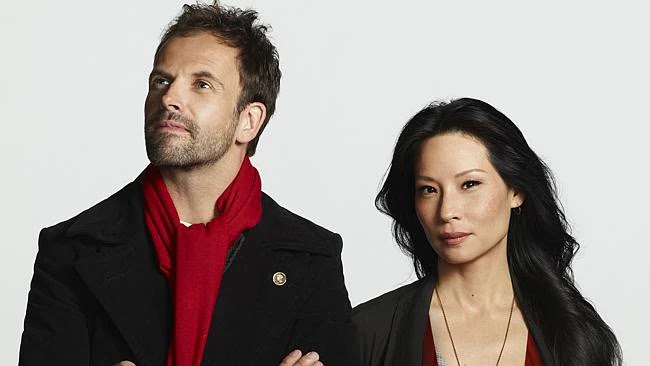
Lucy Liu and Jonny Lee Miller impressed me. I was sure, due to the chemistry between the leads, that a sexual relationship would follow. It didn't. And yet despite (or perhaps, because) of all the Holmeses and Watsons on this list, I believe in the absolute unbreakable friendship of that relationship.

Jude Law and Robert Downey, Jr. deliberately and somewhat self-consciously present a bromance (maybe, it is an American thing--see below). That is, although the movie makes VERY VERY clear that the two have beautiful female significant others, they don't pretend, either, that they don't live in each other's pockets, refusing to be separated. 

Ben Kingsley and Michael Caine in Without a Clue: since Kingsley's Watson is employing Caine's Sherlock, the relationship is less bromance and more Andy and Barney though the latter relationship has its own elements of bromance!

Martin Freeman and Benedict Cumberbatch, interestingly, are more like Brett and Hardwicke/Burke than the others on this list. That is, the relationship is very British. They will fight and die for each other; at the same time, they exist on parallel tracks. 

The Britishers seem to have a knack for presenting the bromance without feeling any need to draw attention to it--or not. Perhaps due to the lingering public school system, Britishers seem to take the bromance rather for granted.

A number of shows on American television in the 1970s to 1980s used two male detectives. With the exception of Archie and Nero--who are entirely unique--an element of bromance resides in nearly all of them and much was made of the two men being pals. They were replaced within a decade with male-female investigatory partnerships. 

In Big Bang Theory culture, male-male detective partnerships may be returning! See White Collar, Psych, and Person of Interest (though the last rapidly expanded to become more like Major Crimes and Murdoch Mysteries, being comprised of a group rather than a duo).


Saturday, March 16, 2024

Wonderful Couple: Evelyn and Bill from Bones

 I love Evelyn and Bill for several reasons. 

1. Wonderful actors! The actors, John Ratzenberger and Millicent Martin, often play frenemies on sitcoms and other shows: combative or long-winded characters against whom the main characters react. They are both fantastic comedic actors, and I love that they get an episode where, yes, okay, they are villains but they are so darn funny and nice! Their blithe confession is delivered with perfect comedic timing, especially the line about the victim: What kind of man is he? He brought his mistress on a couples' retreat!

2. Wonderful marriage! Sure, they thieve together, and they killed together. But what dedication! What warmth! What easy communication! What a great married couple! 

3. Wonderful foils! They mirror Bones and Booth. At this point in the show, Booth has turned down Bones's marriage proposal but won't tell her why. At the marriage retreat, undercover as Tony and Roxie, they demonstrate that despite this temporary snag, they are still better at cheering each other on than many of the other couples. (Many of the other couples demonstrate what Gottman says is the primary marriage-killing emotion: contempt.) 

Like Bones and Booth, Evelyn and Bill are supportive teammates.

Thursday, March 7, 2024

Sci-Fi Couple: Charlie and Amita

Technically, Charlie and Amita from Numb3rs are not science-fiction. They belong to a contemporary police procedural type mystery. 

But they fall into the category of great friends and lovers who delve, together, into unique scientific disciplines. Their specialties overlap yet are quite distinct as are their interests. Charlie is more prone to figuring out a problem in his head--and writing a book--while Amita sees a potential for emergence, "a game taking on a life of its own."

The most telling aspect of Charlie and Amita's relationship--the thing that makes them a sci-fi geeky couple--is Larry's quote after Charlie and Amita try to go on dates and talk about "normal" things (movies and such). 

Dr. Larry Fleinhardt: That there's something else you have to talk about [strikes me as odd]. See, where you see two people unable to talk about politics or movies--

Charlie Eppes: Hey, movies, I - I can - I can talk about - I just saw the penguin movie.

Dr. Larry Fleinhardt: --I see two extraordinary minds that can communicate on the purest level a man and woman can interface on. [Pauses to think.] Okay, second purest.

Charlie Eppes: Geek love.

Dr. Larry Fleinhardt: Hey, no better kind.

Larry's point, which later proves correct, is that rather than the mundane, domestic events proceeding the extraordinary and sublime, the relationship can work the other way round. Charlie and Amita do become a functional couple (they can discuss house-hunting as well as the cosmos). 

The potential for both is indicated early on before Charlie and Amita are "steady"--but they have been working together for awhile.

Amita wants to help a young Indian woman and doesn't know how. Charlie says, "Why not ask your grandmother? She seemed to have good ideas." Charlie is talking out loud--he isn't trying to tell Amita what to do--but his suggestion gives her an epiphany, and she kisses him.  

Geek love-to-real life: it's possible!

Friday, September 9, 2022

Golden Girls' Couples: Rose and Dead People in Blanche's House

Rose's husband died after suffering a heart attack during sex. 

During Season 1, one of Rose's boyfriends, Al, dies after spending a night with Rose. She discovers that he wasn't single, as he claimed, but married. She visits the wife and tells her the truth. 

During the episode, Blanche tells the story of when she learned of her husband's death. It is a blunt recital--with jokes, of course--that addresses the reality of death occurring as life goes on. 

The entire episode has a strong Fall of Icarus flavor. Icarus falls. The farmer plows. The ship sails. The boy whistles. Life continues. It can't stop.

One of Golden Girls' strengths is this realism about life's bodily functions. With Rose, sex and death get combined. 

And jokes--since Rose ends the episode by (temporarily) convincing Blanche and Dorothy that she killed off several more men during sex. 


Wednesday, January 26, 2022

Great Couple: The Baxters

While still honoring his Home Improvement roots, Tim Allen makes a subtle shift regarding the husband-wife relationship in Last Man Standing. 

The relationship in Home Improvement is somewhat adversarial: man versus woman. There is nothing particularly wrong with this approach. As Dominic states in KJ Charles's A Subversive Affair to his ex-lover, "You want an ally. I prefer a challenge." 

Vanessa is an ally. Though just as opinionated and independent and strong-willed as Jill, she also has the facility to let things go. When neighbor Helen Potts, played by Patricia Richardson, shows up for the first time, Mike and Helen get into an argument about the plumbing. Vanessa throws up her hands and says, "It's just water!" 

I am not one who believes that Tim's character in Home Improvement was unfairly portrayed as a dumb male. I am continually astonished by the failure of movie and television reviewers to take visuals into account. Tim Allen runs Home Improvement as effectively as he runs Last Man Standing. He is visually at the center as are all his reactions. This is not wrong. It is a directing and producing choice. 

In a very funny scene in Last Man Standing, Vanessa and her two oldest girls psychoanalyze Mike's behavior re: his daughters. He is chivalrous. He wants to be a protector. He doesn't want to have to pay for weddings. Tim Allen as Mike sits at the table with a nonplussed expression on his face. Eve sits next to him, looking utterly indifferent. 

Mike is the patriarch of the house but not in the way that angry people castigate that term. His patriarchy hails back to Bellisario and others who wanted their men to be tough and responsible and able to take it and their women to be...tough and responsible and able to take it. 

Vanessa is. 

Consequently, she and Mike are allies. 

My favorite example of their companionship is when they go to hear Eve's "band." When the other members of the horrible band bail, Eve goes on. 

Vanessa (alarmed): She was only supposed to get 1/3 of the humiliation. 

Mike: I'm going to fake a heart attack. Look concerned. 

Eve proves a success. As they sit at the table, Mike and Vanessa exchange a glance that says everything: how surprised and pleased and touched they are by their remarkable daughter. 

My other favorite scene occurs early on. Vanessa tells Mike some gossip. He passes it on to his neighbor.  When Vanessa argues that Mike shouldn't have passed on something she told him in confidence, he doesn't argue--as so many sitcom couples do--that she shouldn't have told him in the first place. He agrees. She ought to be able to confide in him anything she pleases. They are a team.

All the bombast and silly puns and vlogs on Last Man Standing come back to this: a husband and wife who can rely on each other. 

Thursday, December 9, 2021

Notes from the Past: Marriages

Lady Georgiana Cavendish
and Elizabeth Foster Cavendish
(below) both married at 17.

Western history is often portrayed in romances as a place where youngsters are married off to elderly personages, innocent teen girls to grumpy men; youthful teen boys to robbing-the-cradle ladies. 

It is true that 12 was the legal age for marriage in the 18th century.

However, as stated by G.J. Meyer, during hard agricultural times in the 1500s, merchants and farmers actually married "in their mid-twenties or later." Even amongst the nobility, later marriages were not uncommon. Although Henry VII's mother was married at age 12 and bore Henry VII at age 13, she didn't bear any more children, likely due to complications with Henry VII's birth.

Medievals may have been callous (debatable), but they weren't stupid. If you wanted kids, you waited for maturity to hit. During the divorce between Henry VIII and his first wife, Catherine, those against the divorce argued that Catherine's prior marriage to Arthur, Henry VIII's brother, was never consummated--therefore, the marriage never existed--therefore, Henry VIII had no reason to whine about the unlawfulness of marrying his brother's wife. The argument for non-consummation has merit: Arthur was sickly and may not yet have undergone puberty despite Catherine and Arthur both being approximately 15 when they married.
Elizabeth--or Bess--then moved in with
Georgiana and her husband whom Bess married
after Lady Georgiana's death.

However, while not condoning marriages to early adolescents (and not all parents of the past did), the denouncement of the act as perverse would have confused anybody up until the 20th century. When middle-age is 35, old-age is 50, and princes are leading armies at 18, getting married at, say, 13 wouldn't seem quite so strange and icky as it does now.

It still wasn't the norm, however useful the trope is in fiction. 

Thursday, November 11, 2021

Great Couple: The Garretts

The Garretts are the parents of Rick, the father of Roz's daughter. They show up in Roz's life to offer unconditional support. They all meet at Frasier's apartment. 

The Garretts are two tall people, played by Jordan Baker and Kevin Kilner. They sport large noses. A number of nose-related jokes ensue. I don't really get jokes related to physical appearance although in this case, they are related to the idea that a baby might inherit any number of characteristics from its parents and grandparents.

They are a wonderful couple (and they come through on their promises to Roz: later, Roz references Alice staying with her local grandparents). They are sweet-tempered, kindly, friendly, down-to-earth. They neither castigate Roz nor try to take her over. They like dogs (yes, two big schnauzers). They enjoy quiche. They are naive but not unsophisticated (they are heading to Paris).

In one adorable scene, Paula Garrett brags about her husband's ability to identify jewels, including sapphires. He is slightly embarrassed. That moment indicates their utter compatibility. They like the same things. They enjoy the same wit. They tease each other in the same way. And they appreciate each other's expertise.

Fantastic couple who fall into the category of "actually, opposites don't attract--similarities do."

Thursday, August 19, 2021

Great Agatha Christie Couple: The Tollivers

In Poirot's "Problem at Sea," the murder takes place on a ship containing several passengers. Among them are the Tollivers. 

The Tollivers are a rather insular British couple who are taking a vacation "abroad." When Poirot innocently suggests trying the local cuisine, they are shocked but game. 

They are a delightful couple. They are rather guileless. The audience learns their names when they introduce themselves to the unpleasant soon-to-be-victim. "I'm Mrs. Tolliver," says the wife. "I'm Mr. Tolliver," says the husband. 

"What a clever arrangement," the victim-to-be responds snidely. 

A few shots later, we see Mr. Tolliver carefully arranging a shawl around Mrs. Tolliver's shoulders. It turns out they have two children: a boy and a girl. Don't worry: they aren't awful parents! They clearly belong to that strata of British society that can leave their children to governesses and tutors and boarding houses while they travel abroad yet still adore them. 

They go about together. They react with compassion and good humor to various events. Mrs. Tolliver looks after the elderly, confused general. They are decent and friendly and obviously enjoy each other's company. 

Wonderful couple!

The Tollivers are played by Caroline John and Jeffrey Beavers.

Monday, July 26, 2021

Great Couple: Sophia and Sal

On Golden Girls, Sophia is a widower. She often talks about her husband, Sal. Like Fish from Barney Miller, Sophia complains about her spouse at the same time that she praises him (Sophia is also a grumpy gal). 

"I look at him, I see Errol Flynn!" she tells Dorothy. 

Sal does show up in flashbacks and dream sequences. He is usually played by Sid Melton. Since Estelle Getty plays her character at Getty's actual age (rather than her character's usual age of 80ish), we get to see the Sophia we viewers know and love (not a stand-in) alongside her stocky, 5'6" husband with his sweet face, cool demeanor, rascally comments, and Brooklyn accent. And big romantic heart!

"I'm going to get some air."

Sal was reportedly not a perfect husband. He gambled at various points in his marriage but after a large loss, never again went too far down that path. Dorothy--who has a tendency to complain anyway--criticizes her father for being absent from her life on occasion. However, she clearly adored him. 

Although Sophia dates and even gets married (to a long-time friend; they immediately separate and return to their families but remain married), nobody can replace Sal. A tough broad who has lasted several years on her own, Sophia misses Sal terribly. They make an entirely believable and true-to-life couple.


Sunday, July 18, 2021

Great Couple in Manga: Tatsu and Miku

Way of the Househusband starts with Tatsu and Miku already married. So far (I am on Volume 3), I haven't learned how they met (not sure if I ever will). Tatsu is already established as a "given" with his in-laws, who seem to accept him as much as they would accept any son-in-law. The father worries about how to entertain Tatsu and resolves to play catch with him!

The great thing about the marriage is how utterly matter-of-fact everyone is. When Tatsu decides to take out a roach, he commands Miku to help him, even if it means hitting him. She does so with slapstick results. He doesn't mind. They move on. 

It is heavily implied that Miku not only is terrible at housework (she's a working wife), she finds household chores tedious (Tatsu revels in them). When Tatsu tries to get her to relax with incense and an eye mask and kitty cat, she feels completely confined and goes to take a bath instead. 

Tatsu, on the other hand, blisses out. 

Yet Miku loves cutesy things (very specific cutesy things), which her husband will go out of his way to make sure she enjoys. And she has a sweet lovingness that leads her to give her husband a day at a carnival.

Their complete acceptance of each other's oddities--even if they both think the other IS a little odd (and other people think they are both quite odd)--makes them a great couple. 


Tuesday, July 6, 2021

Classic Couples: the Quibells

My recent reading about Egyptology in the nineteenth century brings home an important truth: however much grand critical theories like to force individuals  into patterns, people are still people.

A number of male archeologists in nineteenth century Egypt married women who were passionately devoted to archaeology--and quite often writers and artists and funders in their own right. Detractors will wish to point out that they weren't archaeologists, and this is true. 

But this blog is about romance and relationships and marriage, and what stands out is how many of these women were equal partners with their husbands in the field. They were just as committed to the work. Annie Abernathy Pirie Quibell, the wife of James Edward Quibell, an early administrator and pupil of Flinders Petrie (who also married a woman who worked alongside him) was a published author. In fact, she published more than her husband.  

This appears not to have bothered him a whit--in fact, she thanks him by his full title in her opening words to Egyptian History and Art, an acknowledgment that is quite modern in its approach.